dispatch Filed Updated 18 min WR-FCT-012 ERASED thread
ACTION PLAN
The county that froze Russell City and called it blighted is the county whose Board of Supervisors apologized for the town's destruction. The plan its Board accepted commits no money.
Russell City was a town with a blues scene, a carnival, and a ladies' social club. The county froze it, starved it, and then found it blighted.
Every new file, the day it is filed.
You know a town like this one.
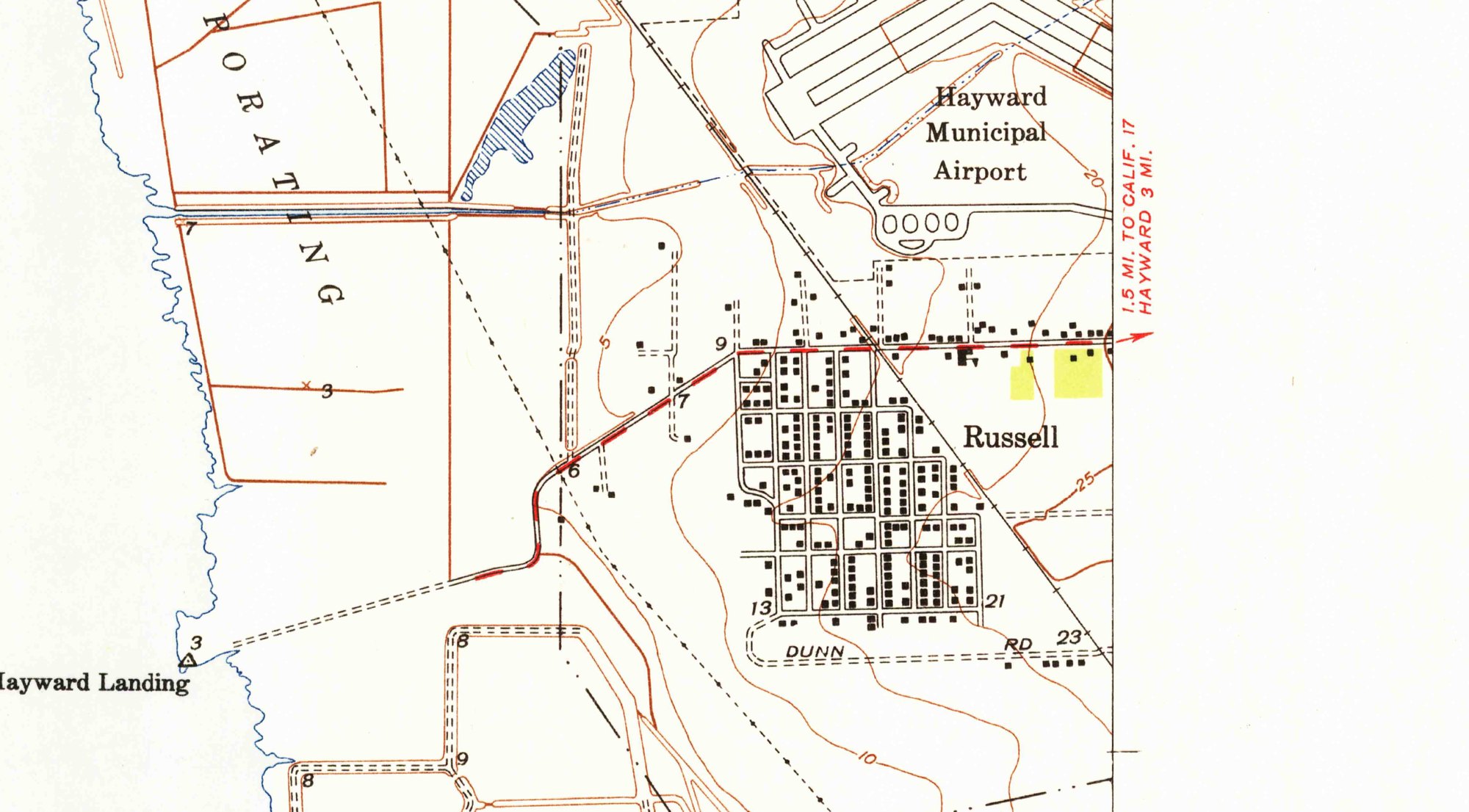
Ray Charles played there. Etta James played there. T-Bone Walker, Lowell Fulson, Big Mama Thornton. There was a carnival every year, and a ladies’ social club that held a fashion show, and restaurants, cafes and nightclubs. It sat near the Hayward shoreline and it was called Russell City.
The county called it blighted.
You already know what that word does. You have watched it work on a place you loved, and you were told the place was the problem.
Here is the part you may not know. The county that said the word has apologized, in a resolution. And the plan it accepted commits no money of its own.
The signal
On Tuesday, June 30, 2026, the Alameda County Board of Supervisors voted unanimously to receive its Reparations Commission’s final report and recommendations: the reparations action plan. The county’s own letter to the Board calls that act acceptance.
The vote appropriated no money. In July 2025 the county voted to create a redress fund of about a million dollars, drawn from several supervisors’ discretionary budgets and $250,000 pledged by the City of Hayward, for direct payments to former residents. But the plan itself, the document accepted this June, commits no new money. The same June 30 vote sunset the Reparations Commission, effective that day, and established a Reparations Standing Committee to monitor the recommendations and advise the Board. The plan its commissioners approved runs to forty-four recommendations, and they are not small ones. Among them: direct compensation for people whose property was unjustly taken, and a right of return for those who were pushed out.
The commission named the remedy. The Board accepted the document that named it.
Accepting a document is not the same as doing what it says. The difference is a word. The word is plan.
The mirror
In 1947, the Alameda County Board of Supervisors froze residential construction in Russell City. The county also took the position that it had no obligation to provide the community with water or sanitation. And by the early 1950s, in the words of the Russell City Arts Committee’s 2024 history, the county “began referring to the community as a ‘blighted’ area in contrast to its active local economy.”
The county held the town under.
In January 1963 there were three public hearings on a redevelopment plan for the town. Two hundred and five families were gone by 1966. Mrs. Henry, who stood up at those hearings, “was paid a mere $2,700 for her $7,500 investment.”
In January 1968, by the 2024 history’s account, the county accepted a $2.4 million offer for the cleared ground.
The county used part of the money to buy the site of the Santa Rita Jail.
The pattern
The 2024 history, made by the Russell City Arts Committee with the City of Hayward, the Hayward Area Historical Society and former residents and descendants, carries a chapter titled Russell City Labeled as “Blighted” to Justify Eminent Domain.
The history puts the word in quotation marks. The word was the instrument.
It is the same body. The Board of Supervisors that froze the construction is the Board of Supervisors that accepted the plan. The county that froze the construction and then called the place blighted is the county that apologized formally, by resolution, on June 27, 2023. Supervisor Márquez’s 2026 letter describes that resolution as “recognizing and apologizing for the County of Alameda’s role in the displacement and destruction of Russell City.”
In 1947 the Board froze construction. In 2026 the Board accepted a document that appropriated nothing.
The mechanism
BLIGHT documented the engine: a city can starve a place, then point at the hunger and call the hunger proof. Alameda County ran that engine from 1947, and by the early 1950s it was saying the word out loud. Freeze the permits. Withhold the water. Decline the sewer. Wait.
What Russell City adds is the document the Board accepted.
Action plan is the same grammar, running the other way. Action. Priorities. Immediate. Every word in it moves, and receiving it commits the Board to nothing that has to happen. You cannot be accused of doing nothing when you have a plan.
Cycles repeat because we refuse to learn, or because the people in power remove the record to keep the cycle running across generations.
Russell City is the first kind, and it is the cleanest case on our shelf, because the record was admitted. Printed, apologized for, accepted, five to nothing. The facts in this file come from the county’s draft minutes and letters, the Reparations Commission’s report, the City of Hayward’s announcements, the press reporting on them, and the 2024 history. All of it is public.
The record is in our hands.
A dollar has moved, at last: about a million of them, set aside in 2025. In January 1968, by the 2024 history’s account, the county accepted $2.4 million for the ground it took. The 2024 history counts the sale a $400,000 loss to the county, after the cost of taking the land and moving the people.
On the table
Mrs. Henry testified. Her granddaughter, Marian Johnson, is quoted in the 2024 history about the seizure of her grandmother’s land.
That is what blighted left out. Not the houses. The hold. The social club, the nightclubs, the blues scene. The 2024 history says it plainly: Russell City “wasn’t just a collection of ‘blighted’ houses; it was home.”
BLIGHT documented the word emptying Mill Creek Valley and running Highway 71 through Kansas City. ACTION PLAN is the same grammar, in the mouth of the body now apologizing for the destruction.
Find the blight finding in your own county, if there is one. Read what it says the place was. Then ask who held it under first.
Correction
Corrected 2026-09-16. This essay published on July 12, 2026. Two factual errors are named here rather than quietly repaired.
The Reparations Commission did not continue. This essay said the county would stand up a permanent reparations commission and that the commission would continue its work. Instead, the same motion that received the commission’s final report sunset the Alameda County Reparations Commission, effective that day, and established a Reparations Standing Committee “to continue advancing, monitoring, and advising on the implementation of reparations-related policies and initiatives.” The corrected sentence appears above and names the motion’s verb: receive. In its letter to the Board, the county calls the act acceptance and states that it and the new committee “do not require additional appropriations at this time.”
The count was wrong. The plan the Board received carries forty-four recommendations across twelve focus areas. This essay said forty-three, a number taken from the commission’s April draft.
Source: Alameda County Board of Supervisors, Summary Action Minutes, Regular Meeting of June 30, 2026, item 77 (motion by Supervisor Miley, seconded by Supervisor Márquez, passed with five ayes), as posted in draft with the Board’s July 14, 2026 agenda. The County Librarian’s letter to the Board, agenda item for June 30, 2026, with its attached Draft Action Plan Report, Version 2, June 2026. Both read in full on September 16, 2026.
Corrected 2026-10-01. This essay published on July 12, 2026. A second reading of the whole essay against its primaries found eight more errors, named here rather than quietly repaired.
The 1968 sale did not make the county money. This essay said “In 1968 the county made more than twice that selling the ground it took.” The 2024 history says the county accepted “a $2.4 million offer” and incurred “a $400,000 loss to the county after the costs of land acquisition and resident relocation were accounted for.” The sentence now gives the price and the loss, in the history’s figures.
The Hayward vote was dated a day late. The Update said “On August 19, 2026, the Hayward City Council voted unanimously.” The city’s announcement, dated August 19, says the Council “voted unanimously Tuesday,” which was August 18. It now says Tuesday, August 18. The source record that called “Tuesday” a defect in the announcement is corrected.
The Update said no application window had been published. It said “No application window has been published” and “This note will say so when applications open.” The city’s Redress Fund page says the fund “is now accepting applications through Nov. 2, 2026,” for a first phase, and lists September workshops on finding property records. That paragraph now says so and names the page.
The 2025 fund was not the county’s alone, and no source read calls it first. This essay said the county “had set aside roughly a million dollars from supervisors’ discretionary budgets,” “its first appropriation toward Russell City redress.” KQED reported that “The city of Hayward pledged an additional $250,000,” bringing the fund to $1 million; accounts of the county’s own July 2025 share differ, and this essay does not settle it. The essay’s own source record called the fund the county’s first; no source read says so. The sentence now reads “In July 2025 the county voted to create a redress fund of about a million dollars, drawn from several supervisors’ discretionary budgets and $250,000 pledged by the City of Hayward.”
A claim about the business district had no source. This essay said the town had “a business district the residents put up themselves because the deeds in town would not sell to them.” The 2024 history says “Numerous enterprises flourished, including restaurants, cafes and nightclubs,” and nothing about deeds. It now reads “a business district of restaurants, cafes and nightclubs.”
The 2024 history was not the descendants’ alone. This essay called it “the descendants’ own history” and “Their own history,” and said of its chapter title “They put the word in quotation marks. They knew the word was the instrument.” Its title page says it is “Presented by: The Russell City Arts Committee,” and its acknowledgments say it was made “in collaboration with the City of Hayward, the Hayward Area Historical Society and numerous Russell City Residents/Descendants.” Those passages now say so, and “The history puts the word in quotation marks.” “Every fact in this file came from the county’s own paperwork, or from the descendants’” now names what the essay rests on, and “nobody removed anything,” which no record can show, now reads “the record was not hidden.”
The hearings were said to follow the agency. This essay said “A redevelopment agency followed in 1963. The hearings followed the agency.” The 2024 history dates the three public hearings to January 1963 (its text gives January 8, 15 and 22; its footnote, January 8, 15 and 23), says “In 1963, the Russell City Redevelopment Agency was created,” and quotes testimony at those hearings that speaks of the agency as already there. It does not settle which came first. The sentence now reads “In January 1963 there were three public hearings on a redevelopment plan for the town.”
The subtitle said the Board accepted the apology. It said the Board “is the Board of Supervisors that accepted the apology.” The Board gave the apology: on June 27, 2023, by the county’s own account, it approved a resolution “recognizing and apologizing for the County of Alameda’s role in the displacement and destruction of Russell City.” The subtitle now says it “apologized for the town’s destruction,” the body line now quotes the resolution’s own terms, and the apology now has a source record.
Smaller changes made at the same time: the Update’s opening sentence, “The sentence about the 2025 appropriation was accurate when it was written, and it still is,” is cut, because the 2025 sentence was not; the essay’s closing lines on the 1968 sale now end on the history’s figure; and the hook line’s “The record was not removed this time” now reads “The record was not hidden this time.”
Sources: Russell City Arts Committee, “Erased by Eminent Domain,” December 2024, including its title page, acknowledgments and footnotes; City of Hayward, announcement of August 19, 2026, and Russell City Redress Fund page; KQED and Local News Matters, July 2025; Local News Matters, July 3, 2023; Supervisor Márquez’s letter to the Board of Supervisors for its meeting of August 4, 2026. Read on October 1, 2026.
Corrected 2026-10-17. This essay published on July 12, 2026. One sentence is named here rather than quietly repaired. The section on the pattern opened: “The descendants never needed the mechanism explained to them.” No source records what the descendants knew or needed explained. The sentence also restated, in new words, a claim the Correction of October 1 had already cut: that the history’s authors “knew the word was the instrument.” The 2024 history says it was made “in collaboration with the City of Hayward, the Hayward Area Historical Society and numerous Russell City Residents/Descendants,” and its title page says “Presented by: The Russell City Arts Committee.” The sentence is cut, and the section now opens with the history and the title of its chapter.
Source: Russell City Arts Committee, “Erased by Eminent Domain,” December 2024, title page and acknowledgments. Read on October 17, 2026.
Corrected 2026-10-22. This essay published on July 12, 2026. One phrase is named here rather than quietly repaired. The excerpt said Russell City “was a town with a blues circuit.” The 2024 history does not use the word. It says “Russell City was a mecca for blues music,” that it “became a lucrative stop for world-renowned blues musicians,” and it names “the city’s significant contribution to the blues scene.” The history calls Russell City a stop for those musicians; it names no circuit. The excerpt now says “a town with a blues scene.”
Source: Russell City Arts Committee, “Erased by Eminent Domain,” December 2024, page 28. Read on October 22, 2026.
Corrected 2026-10-22. This essay published on July 12, 2026. After four corrections, it was re-read against its primaries, and the lines below were found to say more than the record does. They are named here rather than quietly repaired.
-
The plan was said to carry no money. The subtitle, the hook line, the body and the Update said the plan “carries no money” and “There is no money in it.” The plan suggests “a pilot allocation (e.g., $3–5 million annually)” and says a reparations department “should be anchored by a dedicated Reparations Fund.” What holds is that receiving the plan appropriated nothing. Those lines now say the plan “commits no money” and the vote “appropriated no money.”
-
The excerpt said “Russell City was not a slum.” No source says so. The 2024 history records that Russell City “had been declared a ‘slum’ by the Alameda County Grand Jury.” The sentence is cut.
-
The October 1 note fixed one business-district claim and left another. It said the line “now reads ‘a business district of restaurants, cafes and nightclubs.’” The history says “Numerous enterprises flourished, including restaurants, cafes and nightclubs,” and names no business district. The line now names “restaurants, cafes and nightclubs” and no district.
-
The October 1 note said the body line “now quotes the resolution’s own terms.” The line did not. The words it quotes, “role in the displacement and destruction of Russell City,” come from Supervisor Márquez’s 2026 letter describing the 2023 resolution; this file has not read the resolution’s text. The line now names Supervisor Márquez’s 2026 letter as the source of those words.
-
The box said the word was “built to bury” the carnival and “the stage where Etta James stood.” No source says the word was meant to bury the carnival or a stage; the history’s chapter title says the label was applied “to Justify Eminent Domain.” The history says the carnival left after a ride injury, “leaving Russell City for good,” and puts Etta James on no particular stage. The box now says what the word “left out”: “The social club, the nightclubs, the blues scene.”
-
Other lines narrowed to their sources. “The county that manufactured the blight” now reads “The county that froze the construction and then called the place blighted.” “The people who said the word have apologized. They put it in writing” now names the county and the resolution. “In 1947 the document withheld” now reads “In 1947 the Board froze construction,” because the history names no 1947 document. “In 2026 the document accepts. Neither document, by itself, appropriates a dollar” now reads “In 2026 the Board accepted a document that appropriated nothing.” “That is what the plan is for” is cut; the Commissioners’ statement in the plan calls on the Supervisors “to act on it with urgency.” “it commits to nothing that has to happen” now says receiving it commits the Board to nothing. The granddaughter line now names her, Marian Johnson, and says the 2024 history quotes her about the seizure of her grandmother’s land. The subtitle’s “The Board of Supervisors that froze Russell City … is the Board of Supervisors that apologized” now names the county, because the 2024 history says the county, not the Board, began calling the place blighted. The map description now places the grid south of the airport, drops “on San Francisco Bay,” which the crop does not label, and counts about two hundred buildings, by a pixel count of the map. “On the bay flats west of Hayward” now reads “near the Hayward shoreline.” “Both times, the instrument is a document” is cut, and the section now speaks of “the document the Board accepted.” The paragraph on sources now names the draft minutes, the letters and the Reparations Commission’s report, and no longer says the record is “free to read,” since one source needs a sign-in. The closing box’s “the same word” now reads “the same grammar,” as the body already put it. “The county then took the position” now reads “also,” and the closing box now says the body is apologizing “for the destruction.”
-
Lines narrowed on the editor’s rulings. The hook line and one paragraph said “the record was not hidden”; the history credits its 1963 hearing transcript as “provided by the Doris & James Sanders Family,” so the hook line now names both acts, “This time the county admitted its role, the Board received the plan five to nothing,” and the paragraph says only that the record was admitted. “It has been in theirs since 1947” is cut, because no source says what record the county held then. “It is a public document” is cut from the closing box, which now asks readers to find the blight finding in their own county “if there is one.” The 1968 sale now carries its source: “by the 2024 history’s account,” because the county’s plan dates it to 1967 at $2.45 million. The map caption no longer dates the sheet, because the crop carries no date.
Sources: Russell City Arts Committee, “Erased by Eminent Domain,” December 2024, pages 4, 20, 26, 31, 32, 34, 37 and 38; Alameda County Reparations Commission, Draft Action Plan Report, Version 2, June 2026, as attached to the County Librarian’s letter for June 30, 2026; Supervisor Márquez’s letter to the Board of Supervisors for its meeting of August 4, 2026. Read on October 22, 2026.
Update
Updated 2026-09-17, revised 2026-10-01 and 2026-10-22. This essay published on July 12, 2026, and what follows happened after. It is not a correction, except where the Correction above names it: the date of the Hayward vote, the paragraph on applications, and the line on the plan’s money.
More money has moved. The fund is now $1.3 million. On Tuesday, August 18, 2026, the Hayward City Council voted unanimously to approve a redress agreement with Alameda County, an agreement the Board of Supervisors had approved earlier that month. The Russell City Redress Fund now carries $950,000 from the County of Alameda, $250,000 from the City of Hayward, and $100,000 from the Alameda County Office of Education. The announcement describes an initial focus on “aging Russell City residents whose properties were taken by and under threat of eminent domain during the 1960s.”
As of October 1, 2026, applications are open for a first phase. The city’s Redress Fund page says the joint fund “is now accepting applications through Nov. 2, 2026,” from people meeting “initial Phase I eligibility requirements”: those who “resided and personally owned residential property in Russell City between Jan. 1, 1961, and Dec. 31, 1964, and whose property was taken by Alameda County by eminent domain during this period.” Applications go by email to russellcityredress@acgov.org or in person at office hours. Questions go to (510) 272-6684. The city’s August 19 announcement, which this note first relied on, named no window; the window is on the fund’s own page.
This file’s finding, as corrected above, has not changed. The Action Plan the Board received on June 30, 2026 still commits no money of its own. The redress fund is a separate track, built for the Russell City property owners, and the $1.3 million is that fund’s running total, not a second pool stacked on the roughly one million set aside in 2025. It is the same fund, larger, and now under a formal agreement between the county and the city.
Source: City of Hayward, “Hayward City Council and Alameda County Board of Supervisors approve historic agreement to make redress payments to Russell City property owners,” August 19, 2026. Read in full on September 17, 2026. City of Hayward, Russell City Redress Fund page, read on October 1, 2026. The comparison with the 2025 figure reads that announcement against this file’s own earlier record of the fund, alameda-county-russell-city-redress-fund-2025; neither document states the comparison, and it is ours.
How this file was made
Every claim in the docket traces to a public document.
Its clearance record shows these checks, in order:
Receipts. Canon. Copy edit. Voice. Line edit. Proofread. Approval.
The 8 sources · What we have corrected · WR-FCT-012 · 10.5281/zenodo.23091738
Cite this file
Word Reimagined, “ACTION PLAN,” WR-FCT-012, https://doi.org/10.5281/zenodo.23091738.
The number is permanent. WR-FCT-012 names this file today and will name the same file in ten years. Add the date you retrieved it.
This file is also deposited with Zenodo, at CERN, under 10.5281/zenodo.23091738. That copy carries the essay whole, its docket and its source ledger, and it outlives this domain.
Trace record
Every claim in this file resolves to a source in the custody ledger.
- Erased by Eminent Domain: Russell City, 1853–1963 (Russell City Arts Committee, 2024)
The Russell City Arts Committee, 'Erased by Eminent Domain: The City May Be Gone, But the Memories Live On — Russell City 1853-1963.' 49 pp. Hosted by the City of Hayward. December 2024.
archive A
- Alameda County Board of Supervisors Votes on Reparations Action Plan (June 30, 2026)
KALW, 'Alameda County issues historic vote on reparations action plan,' 2 July 2026. Reporting the Board of Supervisors' unanimous 5–0 vote of 30 June 2026 to accept and approve the Reparations Commission's final report and action plan. KALW's text also says the move 'officially sunset the Reparations Commission' and that the Board 'will establish and fund a permanent Reparations Commission' (future tense). No direct cash payments were authorized. Superseded on what the Board did by the county's own minutes: see alameda-county-bos-reparations-item-77-2026 (receive, sunset, establish a standing committee). Corroborated by NBC Bay Area and Local News Matters / Piedmont Exedra.
article B
- Alameda County Reparations Commission, Action Report (Draft, April 2026)
Alameda County Reparations Commission, 'ACRC Action Report,' prepared by Informing Change. Draft Version #1, April 2026; 180 pp. Carries 43 approved recommendations across immediate (1-year) and near-term (1–3 year) priorities, including direct compensation for victims of unjust property takings and a right-to-return program. Superseded before the vote: on 30 June 2026 the Board received Draft Action Plan Report Version 2 (June 2026), which carries 44 recommendations across 12 focus areas; see alameda-county-bos-reparations-item-77-2026.
archive C
- Alameda County Russell City Redress Fund (2025)
Local News Matters. "AlCo supervisors sign off on $1M redress fund to compensate evicted Russell City residents." July 23, 2025. Corroborated by KQED and the City of Hayward.
article B
- Alameda County Board of Supervisors, Item 77: Receive the Reparations Commission Final Report, Sunset the Commission, Establish a Standing Committee (June 30, 2026)
Alameda County Board of Supervisors, Summary Action Minutes, Regular Meeting of Tuesday, June 30, 2026, page 29, item 77, posted in draft (DraftGranicusMinutes_06_30_26.pdf) with the Board's July 14, 2026 regular agenda. Also: letter of Deb Sica, County Librarian, to the Board, dated June 2, 2026 and marked REVISED for the June 30, 2026 agenda, 'Receive Alameda County Reparations Commission Final Report; Sunset the Commission; and Establish Standing Committee,' 2 pp., with attachments including the Draft Action Plan Report, Version 2, June 2026, prepared by Informing Change. Both read in full on September 16, 2026; minutes PDF and letter text retained at reference/dispatch/evidence/action-plan-2026-06-30-primary/.
archive A
- Hayward City Council and Alameda County Board of Supervisors Approve Russell City Redress Fund Agreement (August 19, 2026)
City of Hayward. "Hayward City Council and Alameda County Board of Supervisors approve historic agreement to make redress payments to Russell City property owners." Announcement dated August 19, 2026, on the City of Hayward's own news surface. Read in full September 17, 2026.
web A
- Alameda County Board of Supervisors' formal apology to Russell City descendants (2023)
Keith Burbank, Bay City News, "'We forced you out': Alameda County delivers formal apology to Russell City descendants," Local News Matters, July 3, 2023.
article B
- City of Hayward, Russell City Redress Fund page (read October 1, 2026)
City of Hayward, "Russell City Redress Fund," hayward-ca.gov, read October 1, 2026.
web A
Sources are graded A (primary) / B (secondary academic) / C (secondary journalism) / D (tertiary or contested). See the manifesto’s Evidence Standard for full criteria.
File custody
- File
- ACTION-PLAN
- Accession
- WR-FCT-012
- Thread
- ERASED
- Status
- published
- Published
- 2026-07-12
- Last updated
- 2026-10-22
- As of
- 2026-10-15
Support is welcome and never required. The door is open; it is not a request.