culture Filed Updated 24 min WR-FCT-007
What Was Buried, Not Broken
The traditions of the diaspora were not refuted. They were outlawed, and the law left receipts.
For three hundred years the law outlawed these traditions in words it chose itself: sedition for the gatherings, then fraud, superstition, unnecessary killing. The documents survive. So do the practices the documents were written to erase.
Every new file, the day it is filed.
On the 9th of June, 1987, the city council of Hialeah, Florida, held an emergency public session. The Supreme Court’s opinion records the reason plainly. A congregation had announced it was opening a church, and the city moved to stop it. Over a series of meetings that year the council passed four ordinances. On paper the city’s concerns were public health, animal cruelty, and the disposal of carcasses. The Supreme Court would later allow that those concerns were real. In practice three of the four ordinances were drafted so that “almost the only conduct” they reached was a Santería service.
The council did not hide what it was doing. Residents stood up to denounce the religion by name. The chaplain of the Hialeah police department told the council that Santería was a sin, that it was “foolishness,” that it was “an abomination to the Lord,” that it was the worship of “demons,” and he closed by exhorting them not to permit the church to exist. The council president asked what the city could do to prevent it from opening. The city’s own resolution recorded residents’ “concern” that certain religions “may propose to engage in practices which are inconsistent with public morals, peace or safety.” Then the council voted, and the ordinances became law.
The congregation sued. The case ran all the way to the Supreme Court of the United States, and in 1993 the Court ruled. Not narrowly. Not 5 to 4. Nine to nothing, the ordinances struck down. On the reason, the justices split. Five of them joined the holding that “[t]he ordinances had as their object the suppression of religion.” Only two joined the part of the opinion that recites what the council said. The city of Hialeah lost. The Court said the city could address its concerns with general rules on the disposal of organic garbage, the care of animals and methods of slaughter.
Read the case cold and it looks like an aberration. A small council overreached, the Court corrected it, the system worked. But the case only looks like an aberration if you don’t know what came before it. Hialeah was not the beginning of the story. It was the most recent entry in a ledger three centuries deep.
I went through every door they put in front of me. Baptist family. Catholic school K-12. Converted Catholic. Baptized Baptist. Got saved in my mid-twenties. I was always searching. And the whole time I was searching, there was something pulling at me that none of those doors led to. Not because I wasn’t looking. Because nobody told me it was there.
What nobody told me has a paper trail, and the paper trail starts with the law.
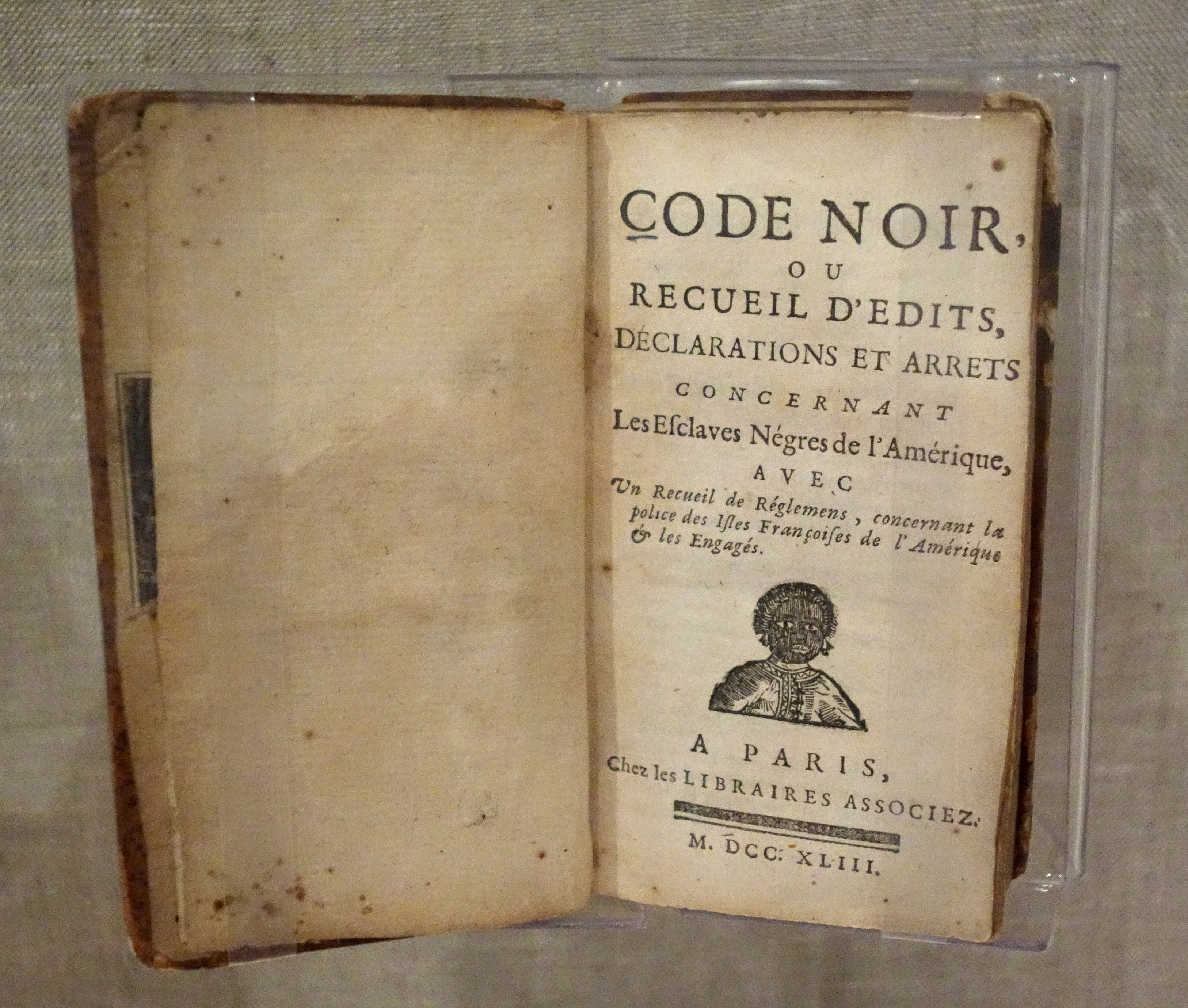
In 1685 the French crown issued the Code Noir, the body of law governing enslaved people across its colonies. Article 2 required that the enslaved be baptized Catholic. Article 3 forbade the public exercise of any religion but Catholicism and declared every gathering held for that purpose an unlawful and seditious assembly. Practice was a crime; replacement was a mandate.
Now read Article 3 again and notice what is not in it. It never names African religion. Not once. Its vocabulary is the vocabulary the crown was aiming at Protestants in the very year it revoked the Edict of Nantes. The traditions people had carried across the ocean, the names of the spirits, the rhythms, the rites for the dead, were not singled out and were not argued with. They were swept up in a net cast for somebody else. The first thing French law did to African religion in the Americas was outlaw it without conceding that it existed.
The British colonies wrote their own version. In 1760, after Tacky’s Revolt, Jamaica folded a clause into an omnibus act on slave control, and that clause made it the first Caribbean colony to criminalize Obeah. Its preamble is the sentence everyone quotes: it speaks of Obeah men and women “pretending to have Communication with the Devil and other evil spirits, whereby the weak and superstitious are deluded into a Belief of their having full Power to exempt them whilst under their Protection from any Evils that might otherwise happen.”
Read it slowly, because it does not say what it appears to say. The law does not accuse these men and women of consorting with the Devil. It accuses them of faking it. The Devil is the con and the believer is the mark. This is a colonial state refusing the tradition twice in a single sentence: first denying that the power is real, then criminalizing the claim to it. Not heresy. Fraud.
And the clause that carries the punishment names the crime in the same terms. Any enslaved person who “shall pretend to any Supernatural Power, and be detected in making use of” blood, feathers, parrots’ beaks, dogs’ teeth, alligators’ teeth, broken bottles, grave dirt, rum, egg-shells “or any other Materials relative to the Practice of Obeah or Witchcraft in order to delude and impose on the Minds of others” could be convicted before two magistrates and three freeholders. The sentence was “death or Transportation.” The objects were only the evidence; the crime was the claim to power. Household things, a conviction, the gallows, and nothing in the clause asks what a single one of those objects meant to the person holding it.
This is where the language did its work. Long before a modern ordinance was ever drafted, the naming had already been settled (witchcraft, sorcery, superstition, fraud) and the naming decided in advance which traditions a person was allowed to study and which a person was only allowed to fear. Call a practice a faith and you owe it a hearing. Call it a fraud and you owe it nothing but a turned back. The words came first. The bans came after. By the time anyone thought to ask what these traditions actually were, the answer had been criminalized for generations.
The independent states inherited the habit. Haiti is the one nation born from a successful revolt of the enslaved. Its penal codes of 1835 and 1864 already banned le vaudoux. That is thirty-one years after independence. A century later the state was still at it: a decree-law of the 5th of September, 1935, against “les pratiques superstitieuses,” which it defined first as the ceremonies, rites, dances and meetings at which sacrifices of cattle or fowl were offered to so-called divinities. It aimed at rituals the state tied to beliefs “harmful to the good name of the country,” in the translation of the historian Kate Ramsey. The colonizer wrote the first law. The freed nation kept writing it for a hundred years. The 1935 decree stayed on the books until the Constitution of 1987 repealed it. Ramsey records what “a hundred years” leaves out. The laws “tended not to be consistently or strictly enforced,” and sustained enforcement “was never politically feasible for Haitian authorities, given the strength of popular opposition.” Enforcement came in episodes, among them the United States Marines during the occupation, under the older codes, and a Catholic Church campaign that began in 1939, took the 1935 law as its warrant, and had the backing of President Élie Lescot’s government.
Set the four documents beside one another and the method shows itself. None of the four enactments asks a practitioner what the practice is for. Argument would concede there was something worth arguing with. In Hialeah the church’s president did speak at the June 9 session, briefly, and the crowd answered him with taunts. Three of the four label the practice and move on. The fourth, the Code Noir, never named the religion at all; it outlawed the gatherings as seditious. What a believer calls worship, the paper files as fraud in Spanish Town, as superstition in Port-au-Prince, as an unnecessary killing in Hialeah. Once the practice is logged as a crime, nobody is owed an answer for it. Four jurisdictions, three centuries, four purposes: one faith for an empire, the security of a slave colony after a revolt, a nation’s good name, a council’s hostility. What they share is narrower: in each, the state set the terms. You do not have to refute what you are permitted to simply outlaw.
A caution before going further. It is easy, from the outside, to fold all of this into one word and call it African religion, and the folding is its own kind of erasure. Vodun in West Africa, Haitian Vodou, Louisiana Hoodoo and Conjure, Santería or Lukumí in the Spanish Caribbean, Obeah in the British islands, Candomblé in Brazil. These are related but distinct. Different homelands, different languages, different spirits, different rites. They share a root and a history of suppression; they are not interchangeable, and treating them as one undifferentiated mass repeats the original colonial move of refusing to look closely. The honest thing is to name them separately, even when their persecutors did not.
Because they did persist, and how they persisted is the part the warnings never mention. Forbidden to honor the spirits openly, practitioners set the spirits behind the faces the law required. An orisha was prayed to under the name of a Catholic saint, so that what looked from the doorway like devotion to the Church was, inside the house, something older and unbroken. In the American South, the same knowledge moved as folk medicine and home remedy, a grandmother’s cure that drew no attention because it asked for none. Ceremonies went underground and stayed there, lineages handed down in private across generations who were never permitted to practice in the light. This was not the romance of resilience. It was concealment, chosen deliberately, because open practice was a punishable act. The burial was forced. The continuation was a decision, made over and over, by people who could have let it die and did not.
So the Hialeah ordinances of 1987 were not an aberration. They were the same kind of instrument, reached for again: a law that let the state name the practice in its own terms. The Code Noir mandated the church and outlawed the rest. Hialeah tried to reach one congregation through an animal-cruelty code. The difference at Hialeah, three centuries on, was a court, and only the last one in line. A federal trial court had upheld the ordinances while acknowledging that they were not religiously neutral, and the Eleventh Circuit affirmed in one paragraph. The Supreme Court recognized that the church’s claim that animal sacrifice is integral to its faith “cannot be deemed bizarre or incredible.” All nine justices struck the ordinances down. Two of them, Justice Kennedy and Justice Stevens, went further and set the council’s own words into the opinion: the chaplain, the cheers, the council president asking what the city could do to prevent the church from opening. The ledger had an entry where the suppression lost.
All those years of Catholic school. Theology. Scripture. Saints. Sacraments. If you asked me what I learned about Vodou, Hoodoo, Santería (the traditions my own ancestors carried), I can tell you exactly what I was taught. Bad. Witchcraft. Devil worship. That was it. Not a chapter. Not a unit. Three words and a turned back. The only place I ever saw these practices was on TV. In movies. Which means everything I knew about them was what somebody else decided to show me. A horror movie. A plot device. Never a practitioner. Never a historian. Never my own family saying: this was ours.
I only started looking because I was building a fictional character. Alaric needed a spiritual history connected to his actual roots. So I went looking for something real. And I found out that the thing I had always been curious about (always called “other,” always called blasphemous by the same institutions that educated me) had been criminalized and suppressed for 300 years. The Code Noir. The colonial church. The Hialeah city council in 1987 passing four ordinances against one congregation and losing 9 to 0 at the Supreme Court. The receipts exist. I just wasn’t supposed to find them.
I’m not here to tell you what to believe. I’m not a practitioner. I’m a man who went through every door organized religion offered and came out the other side still searching. And what I found when I finally went looking wasn’t the devil worship I was warned about. It was a tradition that survived everything they threw at it. That encoded itself in Catholic saint names just to stay alive. That kept lineages intact across generations of people who weren’t allowed to practice it openly.
If you’re not ready to accept another practice, don’t. But don’t dismiss it either. Give it the same respect you want given to yours. Do your research. Find your connections.
This may not be the answer to your questions. But it can lead you to asking the right ones.
CORRECTIONS, 14 July 2026
This casefile was published on 29 May 2026. On 14 July 2026 it was checked line by line against the four primary documents. Five things were wrong, and they are corrected above. The record of what was wrong stays here, because an archive that quietly edits itself is doing the thing this casefile was written to oppose.
The Hialeah ordinances were enacted in 1987, not 1993. The emergency council session was held on 9 June 1987. 1993 is the year the Supreme Court decided the case. An earlier version of this piece collapsed a six-year gap into a single year.
Catholic baptism is mandated by Article 2 of the Code Noir, not Article 3. Article 3 is the ban on the public exercise of other religions. An earlier version attributed both to Article 3.
The Jamaican statute of 1760 was misread in this casefile’s favour, which is the worst way to be wrong. The phrase “communication with the Devil” is genuinely in the law, but the law says practitioners were pretending to it, and that believers were deluded. The colonial state did not file Obeah under the Devil. It filed it under fraud. The phrase also sits in the statute’s recital, not in its operative clause, so an earlier version’s claim that this was “the operative wording of a criminal law” was false.
An earlier version stated that a council member read aloud from scripture at the Hialeah hearing. That is not in the record. It has been replaced with what the record actually contains: the testimony of the Hialeah police chaplain, which is worse than the invention.
Haiti’s criminalization of le vaudoux begins in the penal codes of 1835 and 1864, not with the decree-law of 1935. An earlier version dated the reflex a century too late and understated its own argument.
The four primary documents are cited in the docket above and are retrievable in full.
CORRECTIONS, 2 October 2026
On 2 October 2026 this casefile was read again against its primaries. The July correction fixed the Jamaica passage it named, but not everything around it. This reading found five errors and an argument that weighed its record too far toward itself. Each is named here, with what the casefile said and what it says now. The four documents are real, and Hialeah’s ordinances lost nine to nothing at the Supreme Court. The July record above is kept as it was written.
The hook and the excerpt still said what the July correction took back. The hook said: “They didn’t call it a religion. They called it the Devil. The name set the terms.” The July correction found that the Jamaican statute did not file Obeah under the Devil; it filed it under fraud. The excerpt said the law “criminalized them by name,” and the body says of the Code Noir that “It never names African religion. Not once.” The Code Noir named the gatherings seditious, not the religion. The hook now reads: “They didn’t call it a religion. They called it fraud, superstition, unnecessary killing. The name set the terms.” The excerpt now reads: “For three hundred years the law outlawed these traditions in words it chose itself: sedition for the gatherings, then fraud, superstition, unnecessary killing. The documents survive. So do the practices the documents were written to erase.”
The Jamaica clause was misread in this casefile’s favor a second time. The casefile said: “And the clause that carries the punishment does not argue at all. It lists objects. Blood, feathers, parrots’ beaks, dogs’ teeth, alligators’ teeth, broken bottles, grave dirt, rum, egg-shells. Possession, proved before two magistrates and three freeholders, was enough. The sentence was ‘Death or Transportation.’ Household things, a summary tribunal, the gallows, and no hearing anywhere on what a single one of those objects meant to the person holding it.” The clause reads: “any Negro or other Slave who shall pretend to any Supernatural Power, and be detected in making use of any Blood, Feathers, Parrots Beaks, Dogs Teeth, Alligators Teeth, Broken Bottles, Grave Dirt, Rum, Egg-shells or any other Materials relative to the Practice of Obeah or Witchcraft in order to delude and impose on the Minds of others shall upon Conviction thereof before two Magistrates and three Freeholders suffer death or Transportation.” Possession was not the offense. The offense was the claim to power, and the objects were its evidence. The paragraph now reads: “And the clause that carries the punishment names the crime in the same terms. Any enslaved person who ‘shall pretend to any Supernatural Power, and be detected in making use of’ blood, feathers, parrots’ beaks, dogs’ teeth, alligators’ teeth, broken bottles, grave dirt, rum, egg-shells ‘or any other Materials relative to the Practice of Obeah or Witchcraft in order to delude and impose on the Minds of others’ could be convicted before two magistrates and three freeholders. The sentence was ‘death or Transportation.’ The objects were only the evidence; the crime was the claim to power. Household things, a conviction, the gallows, and nothing in the clause asks what a single one of those objects meant to the person holding it.” The docket said the clause “criminalizes possession of ritual objects”; it is corrected to match.
The Haiti decree was quoted without its qualifier. The casefile said the decree-law of 1935 defined “les pratiques superstitieuses” as “the ceremonies, rites, dances and meetings where offerings were made to so-called divinities.” It defined them first as “the ceremonies, rites, dances, and meetings in the course of which are practiced, in offering to so-called divinities, sacrifices of cattle or fowl,” in Kate Ramsey’s translation. The sentence now reads: “which it defined first as the ceremonies, rites, dances and meetings at which sacrifices of cattle or fowl were offered to so-called divinities. It aimed at rituals the state tied to beliefs ‘harmful to the good name of the country,’ in the translation of the historian Kate Ramsey.” The docket’s “criminalizing Vodou ceremonies” is corrected to match.
It said the Supreme Court was unanimous on the object of the ordinances. The casefile said: “The decision was unanimous (nine justices, no dissent) that the object of the ordinances was the suppression of a single religion, and that this is the one thing the First Amendment does not permit a government to do.” The judgment was unanimous. The holding on the ordinances’ object, in Parts II-A-1 and II-A-3 of Justice Kennedy’s opinion, was joined by five justices. Part II-A-2, which sets out the council’s statements, was joined by one other justice, Justice Stevens. Seven justices did not join it. Justice Scalia, joined by Chief Justice Rehnquist, gave his reason: Part II-A-2 considers “the subjective motivation of the lawmakers.” The sentence now reads: “Nine to nothing, the ordinances struck down. On the reason, the justices split. Five of them joined the holding that ‘[t]he ordinances had as their object the suppression of religion.’ Only two joined the part of the opinion that recites what the council said.” The casefile also said: “The difference, three centuries on, was that this time there was a court willing to read the minutes and say out loud what the council had done. The ledger finally had an entry where the suppression lost.” It now reads: “The difference at Hialeah, three centuries on, was a court, and only the last one in line. A federal trial court had upheld the ordinances while acknowledging that they were not religiously neutral, and the Eleventh Circuit affirmed in one paragraph. The Supreme Court recognized that the church’s claim that animal sacrifice is integral to its faith ‘cannot be deemed bizarre or incredible.’ All nine justices struck the ordinances down. Two of them, Justice Kennedy and Justice Stevens, went further and set the council’s own words into the opinion: the chaplain, the cheers, the council president asking what the city could do to prevent the church from opening. The ledger had an entry where the suppression lost.” The docket’s “unanimous ruling striking down four Hialeah ordinances enacted in 1987 to suppress Santería worship” now reads “unanimous judgment striking down four Hialeah ordinances enacted in 1987. Five justices joined the holding that their object was the suppression of religion.”
It said none of the four documents held a hearing. The casefile said: “Not one of them holds a hearing. Not one asks a practitioner what the practice is for.” The Jamaica clause required a conviction before two magistrates and three freeholders. The Hialeah council held a public session on June 9, 1987, at which the church’s president, Ernesto Pichardo, spoke, and the crowd met “the brief comments of Pichardo with taunts.” It now reads: “None of the four enactments asks a practitioner what the practice is for.” and, two sentences on, “In Hialeah the church’s president did speak at the June 9 session, briefly, and the crowd answered him with taunts.”
It called four instruments one technique. The casefile said: “Each one simply assigns a category and moves on.” and “Four jurisdictions, three centuries, one technique: the wording changes with the era, the function does not.” and, of Hialeah, “They were the same instrument, reached for again: newer paper, identical function. The Code Noir mandated the church and outlawed the rest. Hialeah simply tried to do it through zoning.” By the casefile’s own account the Code Noir never named the religion, and the Hialeah record is a police chaplain calling Santería a sin, not a fraud. The four instruments served different ends. They now read: “In Hialeah the church’s president did speak at the June 9 session, briefly, and the crowd answered him with taunts. Three of the four label the practice and move on. The fourth, the Code Noir, never named the religion at all; it outlawed the gatherings as seditious.” and “Four jurisdictions, three centuries, four purposes: one faith for an empire, the security of a slave colony after a revolt, a nation’s good name, a council’s hostility. What they share is narrower: in each, the state set the terms.” and “They were the same kind of instrument, reached for again: a law that let the state name the practice in its own terms. The Code Noir mandated the church and outlawed the rest. Hialeah tried to reach one congregation through an animal-cruelty code.”
It left out how Haiti enforced its law. The casefile said: “The colonizer wrote the first law. The freed nation kept writing it, and kept writing it, for a hundred years. That is how deep the reflex ran.” Ramsey writes that these laws “tended not to be consistently or strictly enforced” and that sustained enforcement “was never politically feasible for Haitian authorities, given the strength of popular opposition.” It now reads: “The colonizer wrote the first law. The freed nation kept writing it for a hundred years. The 1935 decree stayed on the books until the Constitution of 1987 repealed it. Ramsey records what ‘a hundred years’ leaves out. The laws ‘tended not to be consistently or strictly enforced,’ and sustained enforcement ‘was never politically feasible for Haitian authorities, given the strength of popular opposition.’ Enforcement came in episodes, among them the United States Marines during the occupation, under the older codes, and a Catholic Church campaign that began in 1939, took the 1935 law as its warrant, and had the backing of President Élie Lescot’s government.”
It gave the city’s stated concerns no weight. The casefile said: “On paper the ordinances were about public health, animal cruelty, and the proper disposal of carcasses. In practice they were drafted so precisely that only one kind of gathering could violate them: a Santería service.” and “The city of Hialeah lost completely.” The Court found “multiple concerns unrelated to religious animosity,” held that almost the only conduct three of the ordinances reached was Santería sacrifice, and found that the fourth, on slaughter, reached “substantial nonreligious conduct.” It now reads: “On paper the city’s concerns were public health, animal cruelty, and the disposal of carcasses. The Supreme Court would later allow that those concerns were real. In practice three of the four ordinances were drafted so that ‘almost the only conduct’ they reached was a Santería service.” and “The city of Hialeah lost. The Court said the city could address its concerns with general rules on the disposal of organic garbage, the care of animals and methods of slaughter.” The casefile also left out that a federal trial court and the Eleventh Circuit upheld the ordinances before the Supreme Court struck them down; that is added above.
Smaller changes made at the same time:
- The casefile said the revolt was one “whose own organizers met under the cover of African religious ceremony.” No primary in this casefile supports it, and historians dispute it; the clause is cut.
- In the author’s own passage, “suppressed for 300 years by the same governments that ran the slave trade” now ends at “for 300 years.” Hialeah’s council and independent Haiti did not run the slave trade.
- “fraud in Kingston” now reads “fraud in Spanish Town.” Spanish Town, not Kingston, was Jamaica’s capital in 1760.
- “as a carcass-disposal violation in Hialeah” now reads “as an unnecessary killing in Hialeah.” The ordinances banned sacrifice, defined as killing an animal “unnecessarily” in a ritual. Disposal was among the city’s stated concerns, but no ordinance regulated it; the Court noted that the city “could have imposed a general regulation on the disposal of organic garbage. It did not do so.”
- “The minutes record the reason plainly.” now reads “The Supreme Court’s opinion records the reason plainly.” The reason is taken from the opinion, not from minutes this casefile read.
- The paragraph on naming said “Call it the Devil and you owe it nothing but a turned back.” and listed “(witchcraft, sorcery, superstition, devil-work).” It now says “Call it a fraud and you owe it nothing but a turned back.” and lists “(witchcraft, sorcery, superstition, fraud).”
- “is where Obeah enters English law” now reads “made it the first Caribbean colony to criminalize Obeah.”
- Two quotations from the 1760 act now match the transcription’s lowercase: “evil spirits” and “death or Transportation.” The recital is now quoted to the end of the recital, and the list of objects keeps the act’s “or any other Materials relative to the Practice of Obeah or Witchcraft.” The docket no longer numbers the clause “Clause X,” a number this casefile could not confirm against the act.
- The search description said the law “called these traditions witchcraft, then criminalized them. Not one held a hearing.” It now reads: “From the Code Noir of 1685 to Hialeah’s ordinances of 1987, the law outlawed these traditions in words it chose itself.”
- The source record for the Jamaica act said its enacting clause punished possession. The source record for the Hialeah case said “All nine signed object”; five did. Both are corrected. The retired duplicate record carries a dated note saying the same.
CORRECTIONS, 17 October 2026
On 17 October 2026 a sweep of the published archive found one sentence the October correction should have reached. It is named here rather than quietly repaired.
In the author’s own passage, the casefile said of the tradition: “That organized a revolution.” The October correction cut the claim that the revolt’s “own organizers met under the cover of African religious ceremony,” because no primary in this casefile supports it and historians dispute it. This sentence rested on the same claim. It is cut.
Source: this casefile’s corrections of 2 October 2026, above.
Sources: An Act to remedy the Evils arising from irregular Assemblies of Slaves (Jamaica, 1760), the Obeah clause, transcription published by the Obeah Histories project from The National Archives, UK, CO 139/21; Kate Ramsey, “Prohibition, persecution, performance,” Gradhiva, translating the Décret-loi of 5 September 1935, Bulletin des lois et actes, 1934-35, p. 351; Church of the Lukumi Babalu Aye, Inc. v. City of Hialeah, 508 U.S. 520 (1993), bound United States Reports; Encyclopaedia Britannica, “Spanish Town.” Read on October 2, 2026.
What the law left
How this file was made
Every claim in the docket traces to a public document.
Its clearance record shows these checks, in order:
Receipts. Canon. Copy edit. Voice. Line edit. Proofread. Approval.
The 4 sources · What we have corrected · WR-FCT-007 · 10.5281/zenodo.23113709
Cite this file
Word Reimagined, “What Was Buried, Not Broken,” WR-FCT-007, https://doi.org/10.5281/zenodo.23113709.
The number is permanent. WR-FCT-007 names this file today and will name the same file in ten years. Add the date you retrieved it.
This file is also deposited with Zenodo, at CERN, under 10.5281/zenodo.23113709. That copy carries the essay whole, its docket and its source ledger, and it outlives this domain.
Trace record
Every claim in this file resolves to a source in the custody ledger.
- Code Noir (1685), Articles 2 and 3
Édit du roi touchant la police des îles de l'Amérique française (the Code Noir), March 1685. Article 2: all enslaved people in the islands shall be baptized and instructed in the Catholic religion. Article 3: the public exercise of any religion other than Catholicism is forbidden, and assemblies held for that purpose are declared unlawful and seditious.
archive A
- Jamaica, Act of 1760 (the Obeah clause)
An Act to remedy the Evils arising from irregular Assemblies of Slaves (Jamaica, 1760), the Obeah clause. Recital: Obeah men and women 'pretending to have Communication with the Devil and other evil spirits, whereby the weak and superstitious are deluded.' Enacting clause: any enslaved person 'who shall pretend to any Supernatural Power, and be detected in making use of any Blood, Feathers, Parrots Beaks, Dogs Teeth, Alligators Teeth, Broken Bottles, Grave Dirt, Rum, Egg-shells or any other Materials relative to the Practice of Obeah or Witchcraft in order to delude and impose on the Minds of others,' on conviction before two magistrates and three freeholders, to 'suffer death or Transportation.' The National Archives, UK, CO 139/21; transcription published by Obeah Histories.
archive A
- Haiti, Décret-loi du 5 septembre 1935 sur les pratiques superstitieuses
Décret-loi du 5 septembre 1935 sur les pratiques superstitieuses, government of President Sténio Vincent. Defines the offence primarily as the ceremonies, rites, dances and meetings in the course of which are practiced, in offering to so-called divinities, sacrifices of cattle or fowl. Bulletin des lois et actes, 1934-35 (Port-au-Prince: Imprimerie de l'État, 1935), p. 351.
archive A
- Church of the Lukumi Babalu Aye, Inc. v. City of Hialeah, 508 U.S. 520 (1993)
Church of the Lukumi Babalu Aye, Inc. v. City of Hialeah, 508 U.S. 520 (1993). Opinion of the Court by Kennedy, J. Decided June 11, 1993. Judgment reversed, no dissent. Invalidating Hialeah Ordinances 87-40, 87-52, 87-71 and 87-72 as violations of the Free Exercise Clause. Quoted from the bound United States Reports, volume 508 (Library of Congress scan).
archive A
Sources are graded A (primary) / B (secondary academic) / C (secondary journalism) / D (tertiary or contested). See the manifesto’s Evidence Standard for full criteria.
File custody
- File
- WHAT-WAS-BURIED-NOT-BROKEN
- Accession
- WR-FCT-007
- Thread
- Standalone
- Status
- published
- Published
- 2026-05-29
- Last updated
- 2026-10-17
- As of
- 2026-10-02
Support is welcome and never required. The door is open; it is not a request.