dispatch Filed Updated 10 min WR-FCT-008 NAMED thread
Without a Word for It
In credit regulation, the federal government has removed the legal vocabulary that names redlining as a harm. Here is what the word does.
You don't usually know the rule by name. You know the feeling. The mortgage rate that's a little higher. The appraisal that came in lower. The math that felt wrong.
Every new file, the day it is filed.
You don’t usually know the rule by name. You know the feeling.
The mortgage rate that’s a little higher than the friend with the same income. The appraisal that came in lower than the comp three streets over. The insurance quote that’s somehow steeper for the same square footage on the same block. You sat with it and the math felt wrong. Somebody told you not to take it personally. That’s just the market.
There was a word for what you felt.
The word is disparate impact. It’s the rule that says: if the way a business does business (how it prices loans, how it sets rents, how it scores credit, how it decides who gets approved) ends up hurting a protected group more than others, and there’s no real business reason for it, that’s discrimination. Even if nobody said anything about race. Even if nobody meant to.
The receipt counts. The confession is optional.
The signal
The federal agency that enforces that rule for banks and lenders is called the Consumer Financial Protection Bureau, the CFPB. On November 13, 2025, the CFPB proposed pulling disparate impact out of Regulation B, the rule that carries the Equal Credit Opportunity Act. The Bureau proposed it alone. Nobody joined it. Comments were due back by December 15, 2025, and most people never heard there was a question on the table. On April 22, 2026, the Bureau made it final. It takes effect on July 21, 2026.
The official language says the amendments “would facilitate compliance with ECOA by clarifying the obligations imposed by the statute.” The Bureau’s own reasoning is plainer than that: “under the best reading of the statute, disparate-impact claims are not cognizable under ECOA.”
In plain English: the federal government has taken the legal vocabulary that names a pattern as a harm out of credit regulation. Not proposed. Taken.
The mirror
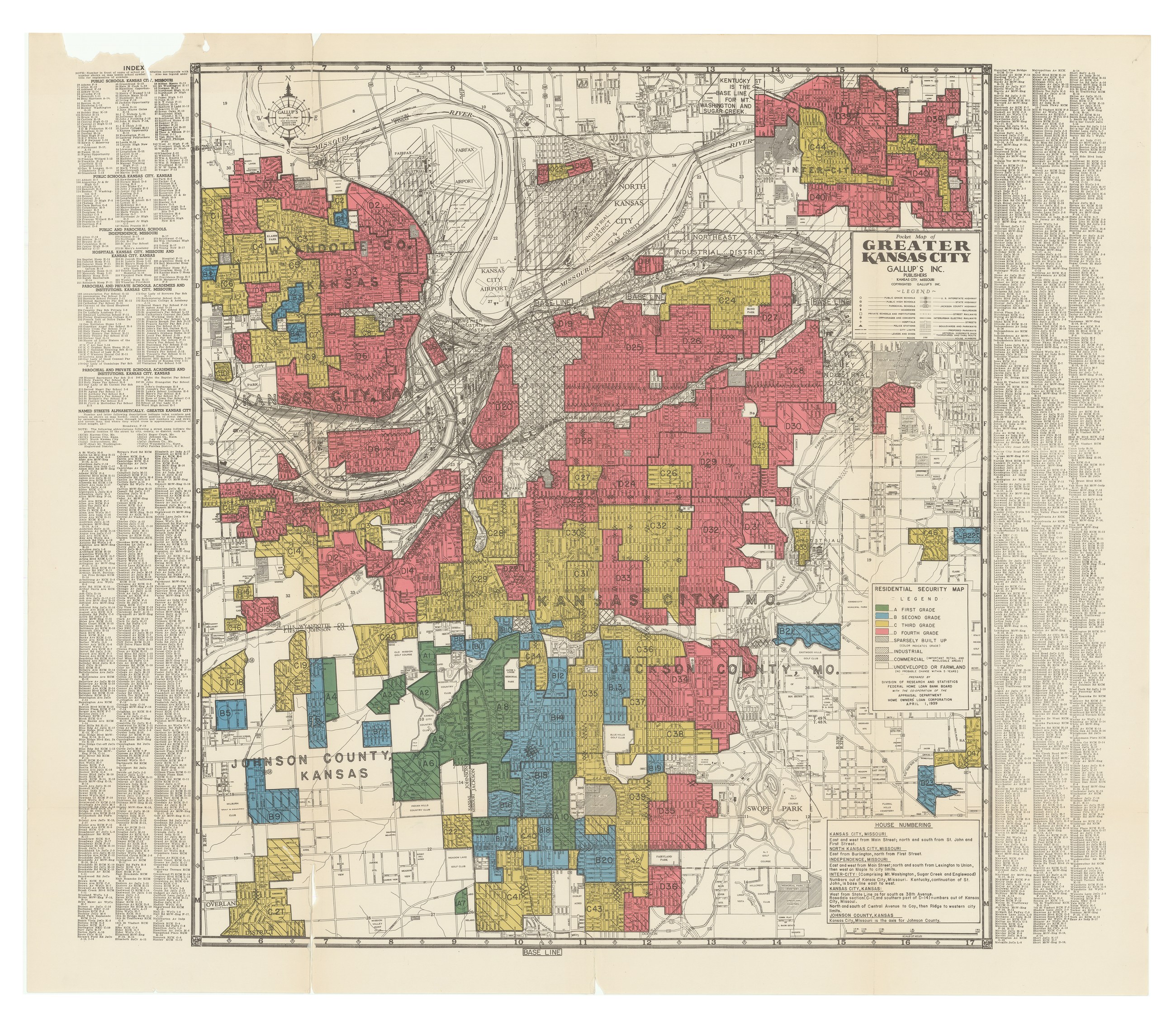
In the 1930s, a federal agency drew maps of American cities.
The Home Owners’ Loan Corporation graded neighborhoods A through D for “mortgage security.” A was green. D was red. And the cards named it. On the Greater Kansas City maps the word Negro is written again and again, in a field built to record exactly that, the word colored beside it. Area D-24: “threatened with negro encroachment from the north, the colored section having extended to 27th Street east of The Paseo.” Area D-3: “the negro influence and continued infiltration.” One card’s note on who lived there: “Low-grade foreigners, negroes, Mexicans.” Nobody hid the word. A federal appraiser wrote it on a government form, in the space provided, and the red line followed the name.
The Fair Housing Act of 1968 made overt discrimination illegal. And the naming went underground: into appraisal models, credit-scoring algorithms, neighborhood risk profiles, “objective” pricing tools. The word disappeared.
Disparate impact is the legal tool that was built to read the underground version. It was the way to say: the grade didn’t go away. It just learned to hide better.
The pattern
The grade. The starvation. The cleanup. Then the explanation.
You’ve heard the explanation your whole life. We don’t see color, we see credit scores. And every time a study showed the numbers landing on the same neighborhoods, the answer was the same: prove intent. Show me where someone said it out loud.
Disparate impact was the answer to that demand. It said: we don’t need the memo. We have the receipt. The receipt is enough.
Take the receipt off the table and the system keeps running with no legal vocabulary for what it does. The lenders, the appraisers, the underwriting models: they already learned the grade in 1933, and they’ve been carrying it forward in language that sounds like business ever since.
The mechanism
The cycle is not an accident. Cycles repeat because we refuse to learn, or because the people in power remove the record to keep the cycle running.
This is the second version. The tool that recognizes the cycle is being unbuilt.
It is the inverse of the move HOLC made. HOLC said negro encroachment. It named the people and let the red line follow. The rule names no one. It says the change would facilitate compliance with ECOA by clarifying the obligations imposed by the statute. That is the distance the country has traveled: from a word you could point to, to a sentence you are not expected to read. The harm did not get gentler. The language did. Disparate impact was the tool built to hear the harm once the word was gone. That is the tool being taken off the table.
On the table
Disparate impact is not the only place this is happening. It’s one place. The administrative vocabulary that protects you from being priced out of your neighborhood, kept out of a mortgage, scored out of a job: that vocabulary is under live, active rulemaking right now. The CFPB proposal has a public comment window. So does the HUD Equal Access rule. So do others.
You don’t have to take our word for any of this. Read the proposal yourself. The mechanism the rule was built to catch is the mechanism Redline documents block by block in Kansas City. The system that prices the mechanism, that issues the loans and writes the appraisals and runs the scores, is the system Money Is a Loan lays bare. Both are on this site. The door is open.
What you felt in your gut about the mortgage rate, the appraisal, the score: there was a word for it. The proposal on the table is to take the word away.
You know what the word is now. Do with it what you want.
Correction
Corrected 2026-07-08. This essay published on June 3, 2026 carrying four factual errors. They are named here rather than quietly repaired.
-
The rulemaking was never joint. The Consumer Financial Protection Bureau proposed it and finalized it alone. The Department of Justice is not a party. DOJ appears one time in the proposal, in a 1991 provision requiring agencies to refer pattern-or-practice cases to it.
-
Nothing was filed on May 28, 2026. The proposed rule published on November 13, 2025. Federal Register document 2025-19864, Docket No. CFPB-2025-0039. Comments closed December 15, 2025.
-
The rule was not pending when this essay ran. It was final on April 22, 2026, Federal Register document 2026-07804, six weeks before this piece published. It takes effect July 21, 2026.
-
Two phrases were quoted here as official language and appear in neither document. “Restoring proper statutory construction” and “eliminating liability that lacks foundation in statute” are not in the proposal and not in the final rule. They have been removed. The Bureau’s actual framing is that the amendments “would facilitate compliance with ECOA by clarifying the obligations imposed by the statute.”
The subtitle has been corrected to the past tense for the same reason. Under The mechanism, the fabricated phrase has been replaced with the Bureau’s real framing.
Two sentences elsewhere still speak of the rule as pending, and are left standing. Under On the table, “The CFPB proposal has a public comment window” is false. That window closed on December 15, 2025. The closing line stands as it was written, and it stands corrected here: the word was not on the table. It was already gone.
Both documents were fetched and read at govinfo.gov on July 8, 2026. The error entered through a research note graded primary before anyone checked its Federal Register number. The grade came first. The document never came.
Updated 2026-10-12. Neither rulemaking this essay describes as live is open for comment. The Regulation B comment window had already closed on December 15, 2025, before this essay published; the rule took effect July 21, 2026 and is in force. The HUD Equal Access comment window closed on June 29, 2026; no final rule has been published and the proposal is still pending. That rule concerns the words “gender identity” in HUD’s Equal Access regulations, not disparate impact. These sentences stand as written and are dated by this note. Under The signal: “It takes effect on July 21, 2026,” now past. Under On the table: “that vocabulary is under live, active rulemaking right now,” “The CFPB proposal has a public comment window,” “So does the HUD Equal Access rule,” and the closing “The proposal on the table is to take the word away.” The Regulation B comment-window sentence was false when written; the rest are now out of date. None describes the state of either rulemaking on October 12, 2026. Item 3 of the July 8 correction, written before the effective date, stands as it was written that day.
Corrected 2026-10-17. This essay published on June 3, 2026 with four statements that ran past the documents behind them. They are named here rather than quietly repaired.
-
The loss was stated wider than the rule. The subtitle said “The federal government has removed the legal vocabulary that names redlining as a harm,” and the line under The signal said “the federal government has taken away the legal vocabulary that names a pattern as a harm.” The documented action is the CFPB’s alone, in Regulation B, the credit rule under the Equal Credit Opportunity Act: the final rule rewrites Sec. 1002.6(a) and deletes the commentary’s references to the effects test. The final rule itself recites that “the Supreme Court held that disparate-impact claims are cognizable under the Fair Housing Act (FHA).” Both sentences now say the vocabulary was removed from credit regulation.
-
A sentence tied the rule to the 1930s map. Under The mechanism the essay said the rule “settles on the same blocks HOLC circled in the 1930s,” and under The mirror it said the pricing tools “just happened to keep producing the same map,” followed by “The map did not.” No document on this essay’s docket connects the rule, or any modern pricing model, to the blocks the Home Owners’ Loan Corporation graded. The final rule names the Corporation once, in a summary of one commenter: “An individual commenter stated that, beginning in the 1930s, the Federal Home Owners’ Loan Corporation and Federal Housing Administration discriminated against Black consumers.” All three are cut.
-
A count with no source. The essay said “So do half a dozen others most people will never hear about.” No document on the docket names or counts them. The essay also said they are “filed in language designed not to be read,” and no document shows that either. The sentence now reads “So do others.”
-
A quotation missing two words. Under The mechanism, the essay set in italics “facilitate compliance by clarifying the obligations imposed by the statute,” as the Bureau’s words. The proposal reads “would facilitate compliance with ECOA by clarifying the obligations imposed by the statute,” and the final rule reads “The amendments facilitate compliance with ECOA by clarifying the obligations imposed by the statute.” The words “with ECOA” are restored.
Source: Consumer Financial Protection Bureau, Equal Credit Opportunity Act (Regulation B), final rule, Federal Register document 2026-07804 (April 22, 2026), and proposed rule, document 2025-19864 (November 13, 2025), Docket No. CFPB-2025-0039. Read on October 17, 2026.
Corrected 2026-10-18. Two sentences are named here rather than quietly repaired. Under the line “The Fair Housing Act of 1968 made overt discrimination illegal,” the essay said “The maps stopped being drawn. The grades stopped being filed.” Set there, they read as if the maps ended with the Act. The maps are the ones this essay dates to the 1930s (“In the 1930s, a federal agency drew maps of American cities”; the Greater Kansas City map is dated April 1, 1939), and the essay gives no date for when they ended. Both sentences are cut.
DOCKET
- Consumer Financial Protection Bureau, Notice of Proposed Rulemaking, Equal Credit Opportunity Act (Regulation B). Federal Register document 2025-19864, published November 13, 2025. Docket No. CFPB-2025-0039. Comments closed December 15, 2025. Proposes deleting the effects test from Sec. 1002.6(a). Issued by the CFPB alone; the Department of Justice is not a party. Trust tier: primary (govinfo.gov, fetched and read 2026-07-08).
- Consumer Financial Protection Bureau, Final Rule, Equal Credit Opportunity Act (Regulation B). Federal Register document 2026-07804, published April 22, 2026, effective July 21, 2026. Docket No. CFPB-2025-0039. Deletes the effects test from Sec. 1002.6(a) and adds language stating that the Act does not recognize it. Trust tier: primary (govinfo.gov, fetched and read 2026-07-08).
- U.S. Department of Housing and Urban Development, Proposed Rule, Equal Access to Housing in HUD Programs Revisions. Federal Register document 2026-08244, published April 28, 2026; comments closed June 29, 2026 (Regulations.gov docket HUD-2026-0529). No final rule published as of October 12, 2026. Trust tier: primary.
How this file was made
Every claim in the docket traces to a public document.
Its clearance record shows these checks, in order:
Receipts. Canon. Copy edit. Voice. Line edit. Proofread. Approval.
The 3 sources · What we have corrected · WR-FCT-008 · 10.5281/zenodo.22945566
Cite this file
Word Reimagined, “Without a Word for It,” WR-FCT-008, https://doi.org/10.5281/zenodo.22945566.
The number is permanent. WR-FCT-008 names this file today and will name the same file in ten years. Add the date you retrieved it.
This file is also deposited with Zenodo, at CERN, under 10.5281/zenodo.22945566. That copy carries the essay whole, its docket and its source ledger, and it outlives this domain.
Trace record
Every claim in this file resolves to a source in the custody ledger.
- CFPB, Equal Credit Opportunity Act (Regulation B): Disparate-Impact Rulemaking (2025 to 2026)
TWO documents. (1) Notice of Proposed Rulemaking: CFPB, 'Equal Credit Opportunity Act (Regulation B),' 90 Fed. Reg., Federal Register document 2025-19864, published 13 November 2025; comments closed 15 December 2025. (2) FINAL RULE: CFPB, 'Equal Credit Opportunity Act (Regulation B),' 91 Fed. Reg. (Vol. 91, No. 77), Federal Register document 2026-07804, published 22 April 2026, RIN 3170-AB54, Docket CFPB-2025-0039. ACTION: Final rule.
archive A
- Mapping Inequality, Greater Kansas City HOLC Map
Mapping Inequality. Greater Kansas City HOLC Residential Security Map.
archive A
- HUD, Equal Access to Housing in HUD Programs Revisions — Proposed Rule (2026)
U.S. Department of Housing and Urban Development, proposed rule, "Equal Access to Housing in HUD Programs Revisions," Federal Register doc. no. 2026-08244 (April 28, 2026); public comment period closed June 29, 2026.
archive A
Sources are graded A (primary) / B (secondary academic) / C (secondary journalism) / D (tertiary or contested). See the manifesto’s Evidence Standard for full criteria.
File custody
- File
- WITHOUT-A-WORD-FOR-IT
- Accession
- WR-FCT-008
- Thread
- NAMED
- Status
- published
- Published
- 2026-06-03
- Last updated
- 2026-10-18
- As of
- 2026-10-12
Support is welcome and never required. The door is open; it is not a request.