culture Filed Updated 23 min WR-FCT-024 NAMED thread
REFUSE
A medical school in Richmond wrote a rule about where to put the bodies. Its earlier minutes called what came out of the dissecting rooms refuse matter. The rule called it offal.
At least fifty-three people came out of a well under East Marshall Street. At least nine of them children. The school had a written regulation telling the demonstrator where to put the offal.
Every new file, the day it is filed.
shall see that the offal is not allowed to collect in the dissecting or dead room and shall deposit it in the sink provided for that purpose.
In 1856 the school wrote down a rule.
It was a housekeeping rule, the kind an institution passes when a problem has become routine enough to need a procedure. It concerned the demonstrator of anatomy, and it told him what to do with what was left when a class was finished.
He “shall see that the offal is not allowed to collect in the dissecting or dead room and shall deposit it in the sink provided for that purpose.”
Read the verbs. Shall see. Shall deposit. That is not how a man writes about something he is ashamed of. That is how a man writes a standing order.
And read the noun, because the noun is a person.
The sink provided for that purpose
The sink was probably a well.
The university’s own archivist, Jodi Koste, does not say that flatly, and it is worth understanding why. The faculty minutes, she writes, “do not reveal when such a place may have been selected or where it was located.” The well found in 1994 “may have been” the one. That is as far as the paper goes.
The bones go further. The forensic analysis of the crania recovered from that well found saw cuts, and it names them: marks that “reflect an autopsy or dissection procedure of sawing to remove the vault cap.” Five autopsied crania. One aborted dissection.
The paperwork will not confirm which hole the rule meant. The skulls do not need it to. The forensic report calls this well “a convenient, expedient, and private repository for human remains.”
The rule did not invent it. The faculty had been working the problem for years. The minutes show them worrying, first, about giving offense: the rooms were to be kept “as neat and as free from offensive matters as possible,” and in “the removal of the refuse matter” it was to be done “as never to give offense to the citizens.” One of them recommended the faculty find an “appropriate place to deposit the refuse matter from the dissecting rooms.”
They found one. Then they wrote it into the regulations, so that nobody would have to decide again.
That is what a rule is for. A rule takes a thing that required a decision and makes it a step. After 1856 the demonstrator did not have to decide where the offal went, or what to call it. The paperwork had already decided: offal, and the sink.
The word
Refuse is not our word for what they did. It is their word for what we were.
That is the thing this file exists to establish, and it changes what kind of document this is.
Virginia Commonwealth University tells the story about its predecessor now, on its own website, and it uses the word: when the cadavers and specimens “were no longer useful for educational purposes, they were callously and disrespectfully discarded as refuse in nearby wells.” Read cold, that sentence looks like a modern institution reaching for the harshest available term to describe its own past. An act of conscience.
It is not reaching. The word is theirs too.
The word was already in the faculty’s earlier record of the demonstrator’s duties. By 1856 the regulation had a different word, offal. History did not call us refuse. The institution called us refuse, in its own record of its own business, while working out where the remains should go.
And when the same faculty described its school in print, it had another word. It promised that “materials for dissection can be obtained in abundance,” and its 1844 catalogue told a young man that “from the cheapness of material” he could practice his operations on the dead.
Abundance. Cheapness. Material. That is a market being described, and the commodity is us.
What was in the well
In April 1994, construction workers preparing the ground for a new medical sciences building found human remains twenty-five feet below East Marshall Street.
Here is where the record demands care, because the number everyone repeats is not a number. The forensic analysis found “a minimum of 44 adults” and “9 children (ages 14 years and younger).”
A minimum. Fifty-three is the sum of two floors, and it has been circulating for years with the word minimum filed off it. The Family Representative Council is plainer still: it is “quite likely that additional human remains and artifacts are still located beneath the Kontos Building.”
There are more of them under there. We do not know how many. That is not a gap in this file. Keep reading, because that is the file.
What cannot be known, and why
The usual version of this story is that they were buried, and then they were stolen. A grave, opened. A theft with a shovel.
The Family Representative Council will not let us say that, and it is right not to. The Council is a body of symbolic descendants, established by the university with community members. In its final report, in its own words:
“we did not know which of the EMSW Ancestors had been buried prior to entering the ‘cadaver trade.’ African American oral history suggests that living individuals also could be abducted for the purpose of supplying cadavers for medical training. If true, at least some of the EMSW Ancestors may never have been deliberately buried.”
And:
“We may never know with certainty whether the bodies of specific EMSW Ancestors were obtained through illegal grave robbing or as a result of ‘dying while black’ in a medical school infirmary.”
The school had more than one place to look. It robbed graves, yes. It also placed two medical students at the almshouse in order to collect anatomical materials. The penitentiary’s convict cemetery, Koste writes, “represented another potential source for bodies.” And it had an infirmary of its own. By the late 1850s some people in Richmond were saying that patients who died there could end up on the dissecting table. The dean denied it in print in 1860. The number of deaths in the infirmary is unknown. The Council names the infirmary as one way the bodies may have come.
So the question how did they get there has no answer for any one person, and may never have one.
Do not read that as a limit on this essay. Read it as what the record holds.
The school kept books.
There is an entry in the Dean’s Account Book recording a partial payment to Dr. Theodorick P. Mayo, demonstrator of anatomy from 1855 to 1857, toward a debt “owed by him to the students at the Almshouse for anatomical materials.” Somebody sat down and entered what was owed for anatomical materials.
So it is not that the institution could not write things down. It wrote down a payment. Nothing Koste found names the people in the well.
The not-knowing is not a gap in this essay. It is what the record holds. It still held in 2018, when the Family Representative Council sat down to write its report and put the words we may never know into it.
The law, which was awake the whole time
There is a version of this where the state simply did not know.
It knew. Virginia’s criminal code, strengthened in the session of 1847 to 1848, is short enough to print entire:
“If a free person, unlawfully, disinter or displace a dead human body, or any part of a dead human body, which shall have been deposited in any vault or other burial place, he shall be confined in jail not more than one year, and fined not exceeding five hundred dollars.”
A year, and five hundred dollars. The legislature looked directly at grave robbing and raised the price of it.
And then, for the most part, it did not collect. The university’s archivist, in the same paragraph in which she cites that statute: public officials “generally ignored those engaged in grave robbing activities particularly when slaves or free blacks were the target.” She records an exception: a Richmond grave robber, Samuel Gennet, “was caught, tried, and convicted for his role in a body snatching that took place on 1 January 1852.”
That is an old instrument, and it still works. You do not have to legalize a thing if the people who enforce the law mostly look away.
But go back and read the statute one more time, because it does something worse than fail to be enforced.
“which shall have been deposited in any vault or other burial place.”
The law protects the buried. That is its plain condition. Disinter a body that was deposited somewhere, and you have committed a crime.
Now set that beside the Council’s conditional: “If true, at least some of the EMSW Ancestors may never have been deliberately buried.”
Take a person who was never put anywhere, by anyone, at all. If such a person was taken, you have not disinterred a body deposited in a vault or other burial place, and by the plain words of this section you have not broken it.
The protection was not only unevenly enforced. If the oral history the Council cites is right, for at least some of the people in that well it was never available: a law against opening graves does not reach a body that was never given one. Dissection itself, the archivist notes, “remained illegal in Virginia during the ante-bellum period.”
The unnamed
The theft did not only take the bodies.
Virginia Commonwealth University, describing the body that now speaks for the dead, calls it a council existing “to symbolically personify the descendants of the unnamed individuals from the East Marshall Street Well.”
The unnamed individuals.
Every one of them had a name. It is gone now. The papers Koste found record a payment and not the people; she found no documentation of how many bodies the school procured, and no monthly accountings of cadavers in the faculty minutes.
So a university and the community it consulted built the thing that was destroyed. The Council’s members were nominated at public engagement forums and selected by a planning committee. They did not inherit this. They stand as family to a number of strangers that nobody can state exactly, whose names have not been recovered.
They made kin by decision, for people the Council calls “now-nameless children, women and men.”
The remains were welcomed back to Richmond on 25 November 2019.
On the table
The school’s earlier minutes called what came out of its dissecting rooms refuse matter. Its 1856 regulation called it offal and named the sink. Richmond went and got the people back anyway.
Find the Black cemetery in your city that nobody maintains. It is on a map somewhere, and it is probably under something now. Learn what is on top of it. That is a public record, and it will tell you what your city decided a grave was worth.
Correction
Corrected 2026-10-02. This casefile published on July 26, 2026. A reading of the whole casefile against its primaries found eleven errors, named here rather than quietly repaired. Its subject stands: the school’s own earlier minutes called what came out of its dissecting rooms refuse matter, a written regulation told the demonstrator where to put it, and a well under East Marshall Street held at least 44 adults and 9 children. Several things it said around that record did not stand, and they are corrected here.
The subtitle gave the rule the wrong word. The subtitle said: “A medical school in Richmond wrote a rule about where to put the bodies. The rule used the word refuse, and the rule was obeyed.” The 1856 regulation, as Jodi Koste reproduces it, says “offal.” “Refuse” appears in the faculty’s earlier record of the demonstrator’s duties (“the removal of the refuse matter”). Nothing in Koste says the rule was obeyed. It now reads: “A medical school in Richmond wrote a rule about where to put the bodies. Its earlier minutes called what came out of the dissecting rooms refuse matter. The rule called it offal.”
The word was said to be in the regulations. The casefile said: “It is not reaching. It is quoting.” and “The word was already in the minutes. The word was already in the regulations. History did not call us refuse. The institution called us refuse, in its own procedure manual, in the ordinary course of business, while working out where the buckets should go.” The regulation says offal, and no source here describes a procedure manual or buckets. The university’s web page uses the same word as the minutes; it does not quote them. It now reads: “It is not reaching. The word is theirs too.” and “The word was already in the faculty’s earlier record of the demonstrator’s duties. By 1856 the regulation had a different word, offal. History did not call us refuse. The institution called us refuse, in its own record of its own business, while working out where the remains should go.” The box at the end said: “The school called them refuse in writing, in advance, as policy. Richmond went and got them back anyway.” It now reads: “The school’s earlier minutes called what came out of its dissecting rooms refuse matter. Its 1856 regulation called it offal and named the sink. Richmond went and got the people back anyway.”
The sink was named as the well. The casefile said: “The sink was a well, under the street, outside the building.” and “The paperwork will not confirm which hole they used. The skulls will.” Koste writes that it “is difficult to prove conclusively” that the well closed in 1860 was the one found in 1994, and records a second refuse well found under the Egyptian Building in 1939. The forensic analysis shows the crania were dissected; it does not identify the well as the regulation’s sink. It now reads: “The sink was probably a well.” and “The paperwork will not confirm which hole the rule meant. The skulls do not need it to. The forensic report calls this well ‘a convenient, expedient, and private repository for human remains.’” The excerpt said: “The school had a written regulation governing where they went, and the regulation is the confession.” It now reads: “The school had a written regulation telling the demonstrator where to put the offal.”
The law was said never to be enforced. The casefile said: “And then it did not collect. The university’s archivist, in the same paragraph in which she cites that statute: public officials ‘generally ignored those engaged in grave robbing activities particularly when slaves or free blacks were the target.’ That is the oldest instrument in this archive and it is still the most reliable. You do not have to legalize a thing if you can arrange never to prosecute it.” Koste writes that officials “generally ignored” grave robbing, and records the conviction of Samuel Gennet for a body snatching on 1 January 1852. No source calls the practice the oldest instrument in this archive. It now reads: “And then, for the most part, it did not collect. The university’s archivist, in the same paragraph in which she cites that statute: public officials ‘generally ignored those engaged in grave robbing activities particularly when slaves or free blacks were the target.’ She records an exception: a Richmond grave robber, Samuel Gennet, ‘was caught, tried, and convicted for his role in a body snatching that took place on 1 January 1852.’ That is an old instrument, and it still works. You do not have to legalize a thing if the people who enforce the law mostly look away.”
The Council was called the descendants. The casefile said: “The descendants will not let us say that, and they are right not to.” The Family Representative Council’s report says the university “engaged with community members to establish the FRC as a body of surrogate or symbolic descendants of the EMSW Ancestors,” and its voting members “were selected by the Planning Committee from a pool of individuals nominated during public engagement forums.” It now reads: “The Family Representative Council will not let us say that, and it is right not to. The Council is a body of symbolic descendants, established by the university with community members. In its final report, in its own words:” “Now set that beside what the descendants had to write: ‘at least some of the EMSW Ancestors may never have been deliberately buried.’” now reads “Now set that beside the Council’s conditional: ‘If true, at least some of the EMSW Ancestors may never have been deliberately buried.’” “So a city built the thing that was destroyed. The Council’s members were nominated at public engagement forums and selected by a planning committee. They did not inherit this. They were asked, and they said yes, and they agreed to stand as family to a number of strangers that nobody can state exactly, whose names nobody will ever recover.” now reads “So a university and the community it consulted built the thing that was destroyed. The Council’s members were nominated at public engagement forums and selected by a planning committee. They did not inherit this. They stand as family to a number of strangers that nobody can state exactly, whose names have not been recovered.” The report gives no support for “a city,” for “They were asked, and they said yes,” or for “whose names nobody will ever recover”; its recommendations include study toward relationships with living descendants.
“May never” became “will never.” The casefile said: “So the question how did they get there has no answer, and it will never have one.” and that the Council “found they had no choice but to put the words we may never know into it.” The Council wrote “We may never know with certainty,” and its own recommendations call for research to continue. It now reads: “So the question how did they get there has no answer for any one person, and may never have one.”
The infirmary was stated as a supply line. The casefile said: “The school had more than one supply line. It robbed graves, yes. It also placed two medical students at the almshouse for the express purpose of collecting anatomical material. It looked at the penitentiary’s convict cemetery. It had an infirmary of its own, where Black patients came in sick and did not always come out.” Koste writes that “The number of deaths that occurred in the infirmary remains unknown,” reports a “superstition” in an earlier newspaper editorial and, by the late 1850s, “rumors,” and quotes the dean’s 1860 denial: “no patient dying in the Infirmary, whether white or black, is ever sent to the dissecting room.” She writes that the school placed the students at the almshouse “in order to collect anatomical materials,” not “for the express purpose.” It now reads: “The school had more than one place to look. It robbed graves, yes. It also placed two medical students at the almshouse in order to collect anatomical materials. The penitentiary’s convict cemetery, Koste writes, ‘represented another potential source for bodies.’ And it had an infirmary of its own. By the late 1850s some people in Richmond were saying that patients who died there could end up on the dissecting table. The dean denied it in print in 1860. The number of deaths in the infirmary is unknown. The Council names the infirmary as one way the bodies may have come.”
A debt was given to the wrong party. The casefile said: “There is an entry in the Dean’s Account Book covering a debt the school owed ‘to the students at the Almshouse for anatomical materials.’ Somebody sat down and reconciled what was owed for bodies.” Koste writes that the Dean’s Account Book “documents a partial payment to Dr. Theodorick. P. Mayo to honor a debt ‘owed by him to the students at the Almshouse for anatomical materials.’” The debt was Mayo’s, not the school’s, and the entry names anatomical materials, not bodies. It now reads: “There is an entry in the Dean’s Account Book recording a partial payment to Dr. Theodorick P. Mayo, demonstrator of anatomy from 1855 to 1857, toward a debt ‘owed by him to the students at the Almshouse for anatomical materials.’ Somebody sat down and entered what was owed for anatomical materials.” “It wrote down the price. It did not write down the person.” now reads “It wrote down a payment. Nothing Koste found names the people in the well.”
A policy no record shows. The casefile said: “Every one of them had a name. Somebody knew it. It is gone now, and it is gone for a specific and traceable reason, which is that the institution which took them had a policy of not writing anything down.” No source states a policy of not recording. Koste found an absence: “No documentation has been uncovered that reveals the number of cadavers procured,” and the monthly accountings the faculty asked for are not in the minutes. It now reads: “Every one of them had a name. It is gone now. The papers Koste found record a payment and not the people; she found no documentation of how many bodies the school procured, and no monthly accountings of cadavers in the faculty minutes.”
A condition was stated as a fact. The casefile said: “The protection was never unenforced. For an unknown number of the people in that well, it was never available. Virginia wrote a law against opening graves, and the surest way to stay inside it was to make certain your dead had never been given one.” The Council’s words are conditional: oral history “suggests” that living people could be abducted, and “If true, at least some of the EMSW Ancestors may never have been deliberately buried.” No source says the school chose its sources to stay inside the statute, and Koste notes that dissection itself remained illegal. “Take a person from an almshouse. Take a person who died in your own infirmary. Take a person who was never put anywhere, by anyone, at all. You have not disinterred a body deposited in a vault or other burial place, and by the plain words of the statute you have not broken it.” now reads “Take a person who was never put anywhere, by anyone, at all. If such a person was taken, you have not disinterred a body deposited in a vault or other burial place, and by the plain words of this section you have not broken it.” and the passage now reads: “The protection was not only unevenly enforced. If the oral history the Council cites is right, for at least some of the people in that well it was never available: a law against opening graves does not reach a body that was never given one. Dissection itself, the archivist notes, ‘remained illegal in Virginia during the ante-bellum period.’”
The argument claimed more than its sources show. Having cut the policy, the casefile still read the not-knowing as design. It said: “Do not read that as a limit on this essay. Read it as the achievement of the institution.” and “The not-knowing is not a gap in the record. It is the record. It is the finished product, and it worked, and it was still working in 2018, when the descendants of these people sat down to write their own report and found they had no choice but to put the words we may never know into it.” Koste reports an absence, and the faculty asked for the count. It now reads: “Do not read that as a limit on this essay. Read it as what the record holds.” and “The not-knowing is not a gap in this essay. It is what the record holds. It still held in 2018, when the Family Representative Council sat down to write its report and put the words we may never know into it.” “The easy version of this story is that they were buried, and then they were stolen.” now reads “The usual version of this story is that they were buried, and then they were stolen.” The hook said: “The school did not have a habit. It had a regulation.” The faculty had been working the problem for years before 1856. It now reads: “The school had a habit. Then it wrote a regulation.” “After 1856 no one at that school had to look at a dead woman and choose what she was. The paperwork had already chosen.” now reads “After 1856 the demonstrator did not have to decide where the offal went, or what to call it. The paperwork had already decided: offal, and the sink.” “They made kin by decision, because the paperwork of kinship had been thrown down a well.” now reads “They made kin by decision, for people the Council calls ‘now-nameless children, women and men.’”
Smaller changes made at the same time:
- “The minutes show them worrying, first, about the smell reaching the neighbours:” now reads “The minutes show them worrying, first, about giving offense:”; the minutes Koste quotes speak of “offensive matters” and “offense to the citizens,” not a smell.
- “And when the same faculty advertised itself to prospective students, it had another word.” now reads “And when the same faculty described its school in print, it had another word.”; Koste quotes the “abundance” line from the faculty, not from an appeal to students.
- “The university’s own archivist will not say that flatly, and it is worth understanding why she will not.” now reads “The university’s own archivist, Jodi Koste, does not say that flatly, and it is worth understanding why.”
- “practise his operations” now reads “practice,” in American spelling; it is not inside a quotation.
- The search description now says the school’s records called what came out of its dissecting rooms “refuse matter.”
- The Council’s report in the docket is now described as the Council’s record, not the descendants’, and the docket now carries the Council’s conditional with its “If true.”
- The Word of the Week entry for REFUSE carried “The skulls will” and “It is quoting itself,” and is corrected to match.
- The source records for the Code of Virginia, Koste, the Council’s report and the university’s page carried the same claims and are corrected to match.
Sources: Jodi L. Koste, “Anatomical and Surgical Training in Nineteenth-Century Richmond” (VCU Scholars Compass, 2012); Douglas W. Owsley and Kari Bruwelheide, the East Marshall Street Well skeletal analysis (VCU Scholars Compass, 2012); Family Representative Council, Final Report (2018); East Marshall Street Well Project, Virginia Commonwealth University, “About”; Code of Virginia (1849), ch. 196, § 13. Read on October 2, 2026.
Corrected 2026-10-19. This casefile published on July 26, 2026. Two quotations did not read as their sources print them, named here rather than quietly repaired. The docket quoted the Family Representative Council’s report as saying the bodies may have come “as a result of dying while black in a medical school infirmary.” The report sets “dying while black” in its own quotation marks; the docket dropped them; the casefile’s body kept them. Jodi Koste’s title was given as “Anatomical and Surgical Training in Nineteenth Century Richmond,” in the docket, in the sources of the October 2 correction and in the source record. Her title page prints “Nineteenth-Century,” with a hyphen. Both now read as printed.
Source: Family Representative Council, Final Report (East Marshall Street Well Project, VCU), page 10; Jodi L. Koste, “Anatomical and Surgical Training in Nineteenth-Century Richmond” (VCU Scholars Compass, 2012), title page. Read on October 19, 2026.
Corrected 2026-10-19. This casefile published on July 26, 2026. One heading was quoted short, named here rather than quietly repaired. The docket said the Code’s section rubric is “Violation of sepulture.” The Code of Virginia of 1849, page 740, prints the italic heading over section 13 in full: “Violation of sepulture; cruelty to animals; profanity, &c.” The docket now quotes the heading in full.
Source: The Code of Virginia (1849), page 740, page image as scanned for the Internet Archive. Read on October 19, 2026.
What the law left
- 1849 Code of Virginia, ch. 196 § 13, p. 740, strengthened in the session of 1847-48
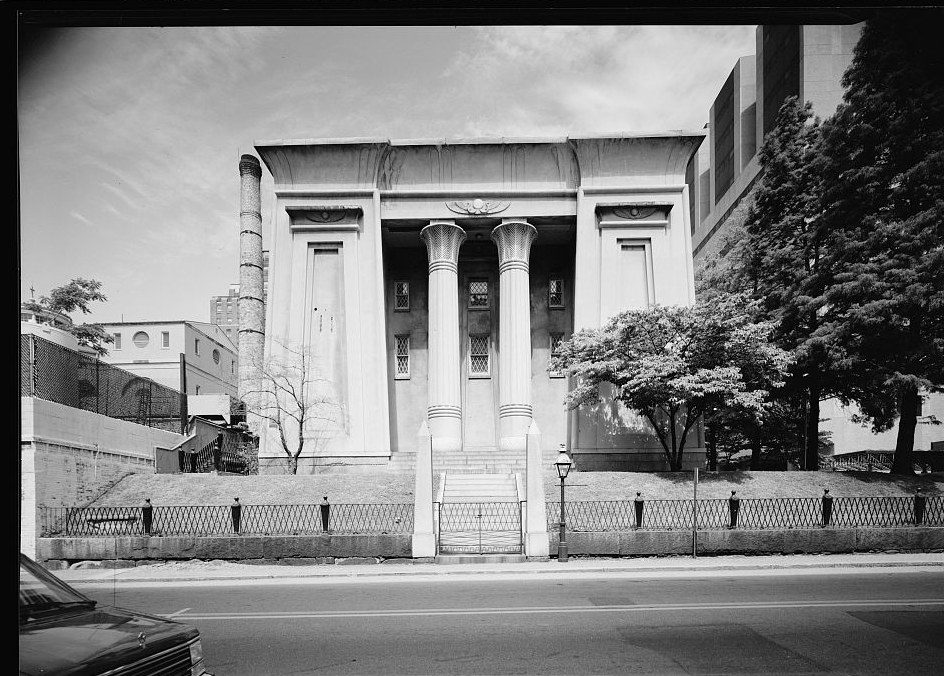
- 1856 Regulations of the Medical College of Virginia, 1856, and the faculty minutes of 18 September 1848, reproduced in Jodi Koste, 'Anatomical and Surgical Training in Nineteenth-Century Richmond' (VCU Scholars Compass, 2012). The demonstrator 'shall see that the offal is not allowed to collect in the dissecting or dead room and shall deposit it in the sink provided for that purpose.' Earlier minutes direct the removal of 'the refuse matter' from the dissecting rooms. Koste also records that public officials 'generally ignored those engaged in grave robbing activities particularly when slaves or free blacks were the target.' Trust tier
- 2012 Douglas Owsley and Kari Bruwelheide, analysis of the East Marshall Street Well remains (VCU Scholars Compass, 2012)
- 2018 Family Representative Council, Final Report (dated 21 August 2018; recommendations presented 13 December 2018). The Council's own record; it describes itself as a body of surrogate or symbolic descendants. 'If true, at least some of the EMSW Ancestors may never have been deliberately buried' (p. 18). 'We may never know with certainty whether the bodies of specific EMSW Ancestors were obtained through illegal grave robbing or as a result of "dying while black" in a medical school infirmary' (p. 10). Additional remains are 'quite likely' still beneath the Kontos Building (p. 8). Trust tier
- 2019 East Marshall Street Well Project, Virginia Commonwealth University. The university's institutional account
How this file was made
Every claim in the docket traces to a public document.
Its clearance record shows these checks, in order:
Receipts. Canon. Copy edit. Voice. Line edit. Proofread. Approval.
The 5 sources · What we have corrected · WR-FCT-024 · 10.5281/zenodo.23111494
Cite this file
Word Reimagined, “REFUSE,” WR-FCT-024, https://doi.org/10.5281/zenodo.23111494.
The number is permanent. WR-FCT-024 names this file today and will name the same file in ten years. Add the date you retrieved it.
This file is also deposited with Zenodo, at CERN, under 10.5281/zenodo.23111494. That copy carries the essay whole, its docket and its source ledger, and it outlives this domain.
Trace record
Every claim in this file resolves to a source in the custody ledger.
- Code of Virginia (1849), ch. 196 § 13, Violation of sepulture
Code of Virginia (Richmond, 1849), ch. 196 § 13, p. 740; strengthened in the session of 1847-48. 'If a free person, unlawfully, disinter or displace a dead human body, or any part of a dead human body, which shall have been deposited in any vault or other burial place, he shall be confined in jail not more than one year, and fined not exceeding five hundred dollars.' Italic heading over § 13: 'Violation of sepulture; cruelty to animals; profanity, &c.'
archive A
- East Marshall Street Well Project, Virginia Commonwealth University
East Marshall Street Well Project, Virginia Commonwealth University. Institutional record of the 1994 discovery of human remains in a well beneath East Marshall Street, Richmond, Virginia, and of the Medical College of Virginia's 19th-century acquisition of cadavers through grave robbing.
web A
- Koste, Anatomical and Surgical Training in Nineteenth-Century Richmond (2012)
Jodi L. Koste, 'Anatomical and Surgical Training in Nineteenth-Century Richmond,' East Marshall Street Well Project, VCU Scholars Compass (2012). Reproduces the Medical College of Virginia faculty minutes and the 1856 regulations, and documents the sources of the school's cadavers.
article A
- Owsley and Bruwelheide, Human Skeletal Remains from Site 44HE814 (2012)
Douglas W. Owsley and Kari Bruwelheide, analysis of the human skeletal remains recovered from the East Marshall Street Well, site 44HE814, VCU Scholars Compass (2012). 'Based on bone counts for the total series, a minimum of 44 adults (individuals 15 years and older) and 9 children (ages 14 years and younger) are represented.'
article A
- East Marshall Street Well Family Representative Council, Final Report (2018)
Family Representative Council, East Marshall Street Well Project, Final Report and Recommendations. Title page dated 21 August 2018; final recommendations presented to VCU on 13 December 2018. 34 pages. The Council's own record, in its own words; the Council is a body of surrogate or symbolic descendants, established by VCU with community members (p. 10).
archive A
Sources are graded A (primary) / B (secondary academic) / C (secondary journalism) / D (tertiary or contested). See the manifesto’s Evidence Standard for full criteria.
File custody
- File
- REFUSE
- Accession
- WR-FCT-024
- Thread
- NAMED
- Status
- published
- Published
- 2026-07-26
- Last updated
- 2026-10-19
- As of
- 2026-07-14
Theme custody
Support is welcome and never required. The door is open; it is not a request.