power Filed 05 · 19 19 min WR-FCT-005 NAMED thread
NAMING MACHINE
How civic language licenses extraction, and why the title is the document
Every generation gets a new word for the same machine. The word changes. The taking doesn't.
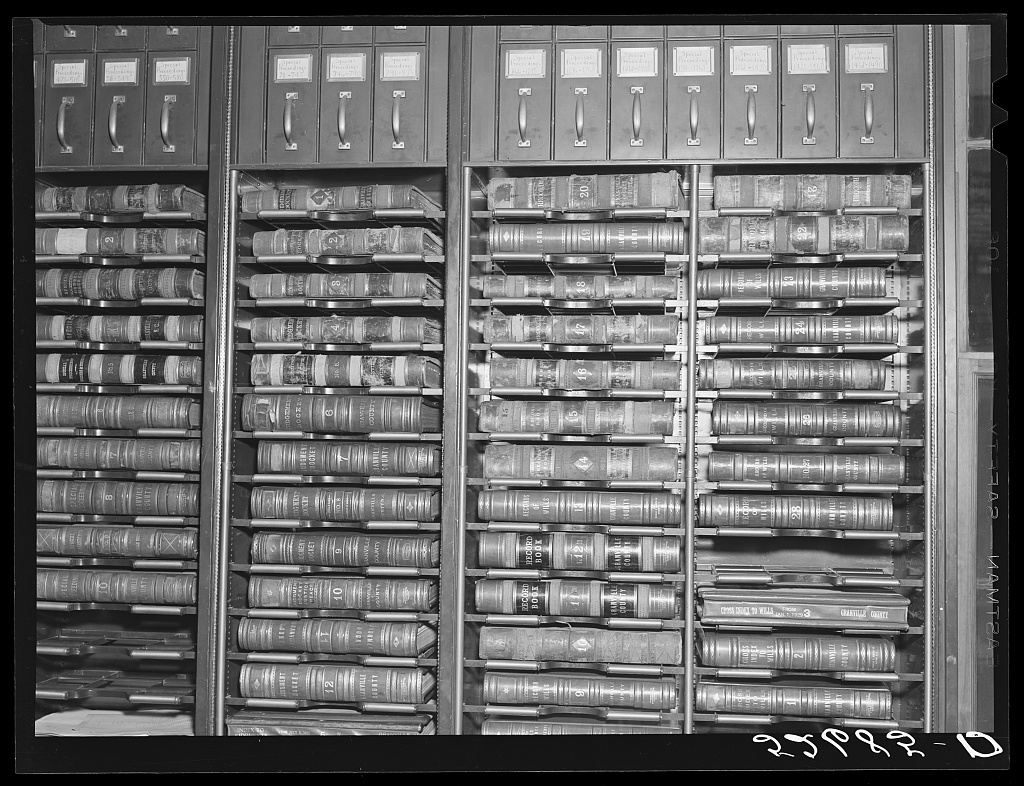
Every new file, the day it is filed.
The title is the document.
Not a headline. Not a summary. The operative instrument. The word that licenses what follows.
Read the executive order slowly: Restoring Truth and Sanity to American History.
That sentence does not describe an action. It performs one. It takes the existing record and names it: pathology, distortion, madness. All before a single panel is removed from a single wall. The taking comes second. The naming comes first. The naming is what makes the taking legible.
That is not a new trick. That is the machine.
Every generation of American institutional demolition has required a vocabulary.
In the 1930s, it was detrimental influences. Infiltration. Hazardous. The map did not reflect fear. It organized it into a workflow, a color code, a mortgage logic. The word licensed the line. The line licensed the capital denial. The capital denial licensed everything that came after: the deterioration, the clearance order, the freeway, the “revitalization” forty years later when the land was speaking somebody else’s language.
In the 1950s and 1960s, the word was blight. Then urban renewal. Blight made demolition a public health measure. Urban renewal made displacement a civic gift. Both words performed the same operation: they translated taking into giving. They made the people being removed sound like the problem, and the removal sound like the solution.
Some takings did not need a word at all. Project R-51 was the urban renewal designation that destroyed two predominantly Black neighborhoods, Lickskillet and The Bottom, in Athens, Georgia. It just needed a number. A bureaucratic designation that replaced two community names with a project code. The people who lived there didn’t get a word. They got a form.
The mechanism is more durable than any single word.
Every generation produces a new version because the machine runs on language, not on any particular vocabulary.
When Carter G. Woodson established Negro History Week in 1926, the Association he directed says, “he sought to turn the commemorations more forthrightly into a far-reaching, organized, and sustained effort to transform how Black folks viewed themselves and how the world viewed them.”
The effort was institutional. Year after year, the Association says, he “built Negro History Week into an African American and American cultural institution.” This casefile’s argument is that a record that is not actively maintained is not neutral. It is being actively unmade by the institutions that benefit from its absence.
The centennial of Negro History Week falls in 2026.
In 2026, the federal government is removing Black history from national parks under an executive order.
Woodson’s 1926 effort is not historical context for this moment.
It is live thesis.
What followed the order is in the Docket above. Read it slowly.
Slavery interpretive panels. Gone from Independence National Historical Park. The park where the Declaration of Independence was drafted. The panels stood at the site of the President’s House, a block north of Independence Square, where, by the city’s 2006 agreement with the Park Service, at least nine enslaved Africans kept by George Washington lived.
The “Scourged Back” photograph. Ordered removed from an exhibit panel at Fort Pulaski, E&E News reported, citing two people briefed on the matter. On September 16, 2025, the Interior Department told The Hill: “I can confirm that NPS sites were not asked to remove the photo.” If you don’t know this image: it is a photograph, taken in 1863, of a man who escaped slavery, called both Gordon and Peter. His back is documented evidence. Scars from systematic violence. E&E News reports it was used during the Civil War by abolitionists to galvanize support for emancipation.
About eighty items flagged for removal at the Selma to Montgomery National Historic Trail. The trail that commemorates the march. The march that produced the Voting Rights Act. That count comes from the groups behind the Boston lawsuit filed February 17, 2026, who gave it to NPR/AP; the White House called the suit premature and “based on inaccurate and mischaracterized information.”
A federal judge sided with Philadelphia. Ordered the President’s House panels restored. The government appealed.
Read that again: the government appealed a judge’s order to restore historical documentation to a public park.
That is not a cultural dispute.
That is a paper war over who controls the record.
The word-engine methodology requires this: you read the document not for what it says it means, but for what it does.
So read the title.
Restoring. The word assumes a prior condition: a truth that existed before, was disrupted, and now requires recovery. It does not say revising or correcting or replacing. Restoring. The thing being restored already existed; what currently stands in its place is a corruption. The title is an argument that the existing record is the aberration. The version being installed is the original.
Truth. Not a truth. Not our truth. Truth: singular, definite, complete. The word forecloses debate before the order is read. If the other account was truth, this order would have nothing to restore. The word does not argue against the existing record. It simply negates it. The panel, the photograph, the trail marker: not evidence, not contested, not under review. Not true.
Sanity. This is the sharpest word in the title. Sanity positions the existing record not as wrong but as disordered, as a symptom of institutional illness. You do not debate the sanity claim. You treat the condition that produced it. The archive does not need a rebuttal. It needs a diagnosis. And the diagnosis, conveniently, has already been written into the title.
To American History. The possessive is doing work. Not “to the historical record.” Not “to historical documentation.” To American History: the proper noun, the singular tradition, the national inheritance. The history that is American, that belongs to the nation, that the nation has a right to define and protect. The people whose history is being removed are inside America, but the title positions their record as something that was done to American History. A contamination of the tradition, not a part of it.
The title is a machine that runs in four words.
It positions erasure as recovery. It positions the record as the wound. It positions the institution executing the removal as the healer.
This is not new. This is the machine.
The Mechanism — Word by Word
Restoring
The prior is the truth
Truth
The record is foreclosed
Sanity
The archive is pathology
American History
The possession is asserted
Frame the existing record as corruption. · Name the removal as healing. · Claim the tradition as singular. · File the paperwork. · Call the erasure a restoration.
The HOLC appraiser did not know the word “blight” would replace “detrimental influences.” The urban renewal planner did not know “revitalization” would replace “clearance.” The word does not persist. The machine does.
The words were not even sequential. In the same decade, two federal agencies used two different words for the same act: HOLC wrote detrimental influences on its survey cards, while the FHA Underwriting Manual (1938, and earlier editions such as 1936) called it adverse influences, the phrase it used to keep “inharmonious racial groups” out of insured neighborhoods. One machine can run more than one vocabulary at once.
What persists is the function: make the existing condition sound like the problem. Make the taking sound like the solution. Transfer authorship of the outcome to the people being taken from.
The neighborhood declined because the people in it let it deteriorate. (Not because the bank refused to lend. Not because the appraiser colored it red. Because of the people.)
The archive was corrupt because the people who maintained it had an agenda. (Not because the federal government is executing a documented removal campaign. Because of the archivists.)
You cannot defeat this machine with better evidence alone.
The machine does not argue against the evidence. It recategorizes it. It says the evidence itself is the symptom. It says the photograph is not documentation. It is the disorder that needs correcting. It says the panel is not history. It is the version of history that required sanity to be restored from.
And here is the sentence that makes people shift in their seat:
The machine does not need to win the argument. It only needs to outlast the institutional will to honor the record. In February 2026, a federal judge ordered the panels restored. The government appealed. On June 18, 2026, the Third Circuit vacated that order, holding that the district court lacked jurisdiction over four of the city’s five claims and that the city has no “statutory, property, or contractual rights that empower it to curate the exhibits.” NBC10 reported that replacement panels went up in July, and 6abc reported that the court denied the city a rehearing.
The record exists. The question is who will read it.
Woodson, the Association says, built Negro History Week year after year into a cultural institution.
What happens by default is not neutral. The default is the institutional interest of the entities that benefit from absence.
That is why the house language here is specific: we Docket what is anchored to a public document. We do not speculate inside the Docket. We do not editorialize inside the Docket. We cite the document, name the mechanism, and trace the line between the language and what it licensed.
That is the counter-word.
Not a louder version of the institution’s vocabulary. A different instrument entirely: the specific, the documented, the traceable. The thing that names not just what happened but what word made it happen. The thing that is harder to recategorize because it is already reading itself out loud.
The executive order title says: the record requires sanity restored.
The Docket says: here is the reported order on the photograph and the department’s denial, the panels taken down in Philadelphia, the judge who ordered them restored, the department that appealed. Here is the date. Here is the paper trail.
The machine operates through language. The counter runs through the archive.
The archive is how we stay un-erasable.
On the Table
Name your word.
The one your city used. The one the planning documents used. The one that arrived the year before the demolition notice, the rezoning, the federal funding cut. The one that made the taking sound responsible.
What did your neighborhood get called before it got cleared? What did the school get called before it got closed? What did the community get called before it lost the paper that proved it existed?
If it’s anchored to a public document, Docket it.
If it’s still forming, put it on the table and we hold it until it earns a record.
The naming machine runs on the words we don’t recognize until they’ve already done their work.
Name them anyway.
Correction
Corrected 2026-07-09. This essay published carrying two errors in its Docket. Both are named here.
-
The executive order was dated wrong by roughly three months. The Docket read “The White House, January 2025.” Executive Order 14253 was signed on March 27, 2025 and published in the Federal Register on April 3, 2025, document number 2025-05838. The order carried both an EO number and a Federal Register document number. This Docket filed neither. Verified against the Federal Register API and the govinfo mirror.
-
The Docket merged two lawsuits into one. It filed the Independence Hall ruling under the caption National Parks Conservation Association v. Trump Administration. That ruling belongs to a different case. There are two:
National Parks Conservation Association v. Department of the Interior, No. 1:26-cv-10877 (D. Mass.), challenging removals across National Park Service sites under Executive Order 14253.
City of Philadelphia v. Department of the Interior, No. 26-1348 (3d Cir.), concerning the Independence Hall interpretive panels. The plaintiff is the City of Philadelphia. It is not the Conservation Association.
Both docket numbers were verified through CourtListener. The Docket now carries them as separate entries.
The prose of this essay never named the Conservation Association and never merged the cases. It said a federal judge sided with Philadelphia, and that is what happened. No sentence has been added to bridge the correction.
One claim has been removed rather than repaired. The Docket previously stated “As of April 2026: DOJ appeal active.” The disposition of that appeal has not been read. A status this Docket cannot verify is not a status this Docket will assert.
The prior source record, graded primary, cited its basis as “Covered: NPR, PolitiFact, ABC News.” Three news outlets are not a primary archival source. It has been demoted and split into two records, one per case.
Corrected 2026-07-21. A later correction, in the prose this time, not the Docket. The essay named “adverse influences” as the HOLC appraiser’s word. It was not his. The HOLC area-description form used “Detrimental Influences.” “Adverse influences” belongs to the Federal Housing Administration, its Underwriting Manual (1938, and earlier editions such as 1936), the section titled “Protection from Adverse Influences.” Two federal instruments, one function, and each issued its own word. Both instances now read “detrimental influences.” The essay’s own claim holds: the word does not persist, the machine does.
Corrected 2026-09-15. The essay described the restoration order as standing after it had been vacated. On June 18, 2026, the Third Circuit vacated the order and held that the district court lacked jurisdiction over four of the city’s five claims (City of Philadelphia v. Secretary, U.S. Department of the Interior, No. 26-1348, precedential opinion). The essay kept asking whether the government would comply with an order that no longer existed. The paragraph now states what the court did. Two sentences that named the Department of Justice as the appellant now say “the government”: the appellants were the Department of the Interior and the National Park Service, represented by the U.S. Attorney’s office. A sentence that described the appeal as litigating “whether a federal court could require the federal executive to acknowledge its own history” is cut, with the two sentences before it that characterized the appeal: the court decided jurisdiction and whether the city held any enforceable right to the exhibits.
Corrected 2026-09-30. This casefile published on May 19, 2026. A reading of the whole casefile against its primaries found five more errors, named here rather than quietly repaired. The argument about the title stands.
The panels were placed in the wrong building. The casefile said the slavery panels were gone from “The building where the founders wrote all men are created equal while owning people. That building.” The Third Circuit’s opinion in City of Philadelphia v. Secretary, U.S. Department of the Interior, No. 26-1348, places the exhibit at the President’s House, “on the corner of Sixth Street and Market Street,” a block north of Independence Square, and quotes the city’s 2006 agreement with the Park Service describing the site as where “at least nine enslaved Africans” kept by George Washington lived. The sentence now says that. “Ordered the Independence Hall panels restored.” now reads “Ordered the President’s House panels restored.” In the Docket, “The Independence Hall interpretive panels.” now reads “The President’s House exhibit panels, Independence National Historical Park.” The 2026-07-09 Correction above calls them “the Independence Hall interpretive panels”; that is the same error, left as it was written.
The order was said to remove what others removed. The casefile said “What the order actually removed is in the Docket above,” and its Docket said the order “Directed federal agencies to remove materials deemed inconsistent with the administration’s framing of American history from national parks, public lands, and federal institutions.” Executive Order 14253 names no panel, photograph or trail. It directs the Secretary of the Interior to ensure that properties under the Department’s jurisdiction do not contain content that “inappropriately disparage Americans past or living,” and the Vice President to work through the Smithsonian Board of Regents. It does not mention public lands. The Park Service removed the President’s House panels on January 22, 2026. The Docket now quotes the order.
A reported order was called a removal, and the denial was left out. The casefile said the “Scourged Back” photograph was “Removed from Fort Pulaski” and “was removed from a federal site because it was inconsistent with the order’s definition of the truth that needed restoring.” E&E News reported an order to remove it from an exhibit panel, relayed to park staff according to two people briefed on the matter. On September 16, 2025, an Interior Department spokesperson told The Hill: “I can confirm that NPS sites were not asked to remove the photo.” The passage, the Docket and the summaries now attribute the order to E&E’s sources and carry the denial. The motive sentence is cut, and so is “It is one of the most cited photographs in American history”, which no document in this file supports. “The photograph was used as abolitionist evidence during the Civil War.” now reads “E&E News reports it was used during the Civil War by abolitionists to galvanize support for emancipation.”
Woodson’s argument was characterized without a source. The casefile said that in 1926 “his founding argument was not sentimental. It was structural. Black history was being systematically excluded from the American record,” and that Woodson “understood that the archive requires active institutional maintenance to survive against the default.” The Association for the Study of African American Life and History, which Woodson directed, says that with Negro History Week “he sought to turn the commemorations more forthrightly into a far-reaching, organized, and sustained effort to transform how Black folks viewed themselves and how the world viewed them.” Section 02, the closing passage and the summary box now say what the Association records. The month is gone from “in February 1926”; the file does not establish it.
Three claims had no source. “HOLC appraisers didn’t say Black. They said declining.” is cut: HOLC area descriptions named race; an Atlanta description, as Jason Rhodes quotes it from the National Archives file, cites “proximity to negro property” as one of its “detrimental influences,” and the Docket now carries that item. The two sentences giving words to the Atlanta BeltLine and the Charlotte I-77 expansion are cut; no document in this file records either project using them. “The federal government is still litigating what happened there.” now reads that the Selma count comes from the groups behind the Boston lawsuit, who gave it to NPR/AP, and that the White House called the suit premature and “based on inaccurate and mischaracterized information.”
Smaller changes made at the same time, each quoted as it was and as it now reads:
- “a photograph of Gordon, an enslaved man who escaped to Union lines in 1863” now reads “a photograph, taken in 1863, of a man who escaped slavery, called both Gordon and Peter,” as E&E News names him.
- “Project R-51 did not need a word at all. That was the urban renewal designation” now reads “Some takings did not need a word at all. Project R-51 was the urban renewal designation,” after the cut above, and “erased the Black neighborhoods of Lickskillet and The Bottom” now reads “destroyed two predominantly Black neighborhoods, Lickskillet and The Bottom,” as WUGA reports it. The Docket now carries the WUGA report.
- “The default is not neutrality.” now reads “What happens by default is not neutral,” since the sentences that introduced the default are cut.
- “removing Black history from national parks by executive order” now reads “removing Black history from national parks under an executive order.”
- “Carter G. Woodson understood this a hundred years ago.” is cut. “Woodson’s counter was institutional: build the preservation infrastructure. Commission the scholarship. Create the occasion. Make the archive active rather than passive.” is cut; the paragraph now opens “The effort was institutional.” and quotes the Association, that Woodson “built Negro History Week into an African American and American cultural institution”; “Because a record that is not actively maintained” now reads “This casefile’s argument is that a record that is not actively maintained”; “Woodson’s 1926 founding argument is not historical context” now reads “Woodson’s 1926 effort is not historical context”; and the Section 02 heading “The Founding Argument” now reads “The Founding Effort.”
- “Woodson built Negro History Week because he understood that the archive requires active institutional maintenance to survive against the default.” now reads “Woodson, the Association says, built Negro History Week year after year into a cultural institution.”
- In the summary box, “Carter Woodson knew this in 1926. He built an institution to counter it. One hundred years later, a federal executive order is proving his founding argument more precisely than any historian could have anticipated.” now reads “Carter G. Woodson started Negro History Week in 1926 and built it, year after year, into an institution.”; “precedes the removal of the photograph, the panel, the marker at the trail” now reads “precedes the panels taken down, the reported order on the photograph, the trail items flagged,” as NPR counts them; and “Then read what it removed.” now reads “Then read what followed it.”
- “here is the photograph that was removed, the park where it hung, the judge who ordered it restored” now reads “here is the reported order on the photograph and the department’s denial, the panels taken down in Philadelphia, the judge who ordered them restored.”
- In the Docket, the NPR item now attributes the Selma count to the groups and carries the White House response; the E&E News item now reports the order rather than a removal and carries Interior’s denial; and the ASALH item now quotes what that page records. “active institutional preservation was the only counter” and “The centennial lands in the year the federal government is proving Woodson right.” are cut; the page does not say them, and the Docket does not editorialize.
- In the image description, “Labelled” now reads “Labeled.”
Sources: Executive Order 14253, 90 Fed. Reg. 14563 (April 3, 2025); City of Philadelphia v. Secretary, U.S. Department of the Interior, No. 26-1348 (3d Cir. June 18, 2026); E&E News, September 17, 2025; The Hill, published via WATE September 17, 2025; NPR/Associated Press, February 18, 2026; Association for the Study of African American Life and History, 2026 Black History Theme; Jason Rhodes, Atlanta Studies, September 7, 2017; WUGA, March 2, 2026. Read on September 30, 2026.
DOCKET
- Executive Order 14253, "Restoring Truth and Sanity to American History." Signed March 27, 2025; published in the Federal Register April 3, 2025 (doc. no. 2025-05838). Directed the Secretary of the Interior to ensure that monuments, markers and similar properties under the Department's jurisdiction do not contain content that "inappropriately disparage Americans past or living," and directed the Vice President to work through the Smithsonian Board of Regents, "including by seeking to remove improper ideology from such properties." The title of the order is the primary document.
- NPR, February 18–19, 2026 — Documents specific removals: slavery interpretive panels removed from Independence National Historical Park, Philadelphia; about 80 items flagged for removal at the Selma to Montgomery National Historic Trail, the groups behind the Boston lawsuit said; the White House called the suit premature and "based on inaccurate and mischaracterized information."
- E&E News / POLITICO (Heather Richards), September 17, 2025 — Reports, from two people briefed on the matter, the order to remove the "Scourged Back" photograph, of a man called both Gordon and Peter, from an exhibit panel at Fort Pulaski National Monument, near Savannah, Georgia, part of an agencywide review mandated by Interior Secretary Doug Burgum after the executive order. The Interior Department told The Hill on September 16, 2025: "I can confirm that NPS sites were not asked to remove the photo."
- National Parks Conservation Association v. Department of the Interior, No. 1:26-cv-10877 (D. Mass., filed February 17, 2026). Challenges the removal of historical interpretive materials from National Park Service sites under Executive Order 14253. Docket number verified via CourtListener, July 9, 2026.
- City of Philadelphia v. Department of the Interior, No. 26-1348 (3d Cir.). The President's House exhibit panels, Independence National Historical Park. A federal judge ordered the panels restored; the Interior Department appealed. Vacated and remanded June 18, 2026; opinion read in full September 14, 2026. Rehearing denied (reported by 6abc, September 4, 2026; the order itself was not read). Docket number verified via CourtListener, July 9, 2026.
- Center for American Progress, 2026 — Policy analysis cataloging the scope of the federal erasure campaign: categories of material removed or flagged, federal lands affected, and the administrative apparatus executing removal orders.
- Association for the Study of African American Life and History. "A Century of Black History Commemorations," 2026 Annual Theme. Records that Carter G. Woodson established Negro History Week in 1926 and that "he sought to turn the commemorations more forthrightly into a far-reaching, organized, and sustained effort to transform how Black folks viewed themselves and how the world viewed them."
- Jason Rhodes, "Geographies of Privilege and Exclusion: The 1938 Home Owners Loan Corporation 'Residential Security Map' of Atlanta," Atlanta Studies, September 7, 2017. Quotes the HOLC Atlanta area descriptions held at the National Archives: area C-36 has its "proximity to negro property" cited as one of its "detrimental influences."
- WUGA, March 2, 2026. Reports research into "the urban renewal project R-51 and its destruction of two predominantly Black neighborhoods, Lickskillet and The Bottom," and that "R-51 displaced nearly 400 households and demolished community structures in the 1960s in Downtown Athens."
Cite this file
Word Reimagined, “NAMING MACHINE,” WR-FCT-005, https://doi.org/10.5281/zenodo.23073352.
The number is permanent. WR-FCT-005 names this file today and will name the same file in ten years. Add the date you retrieved it.
This file is also deposited with Zenodo, at CERN, under 10.5281/zenodo.23073352. That copy carries the essay whole, its docket and its source ledger, and it outlives this domain.
Trace record
Every claim in this file resolves to a source in the custody ledger.
- Executive Order 14253: Restoring Truth and Sanity to American History
Exec. Order No. 14253, "Restoring Truth and Sanity to American History," signed March 27, 2025, published 90 Fed. Reg. (Apr. 3, 2025) (Federal Register doc. no. 2025-05838).
archive A
- NPR: Trump Administration Removes Black History Panels from National Parks
NPR. "Trump Administration Removes Black History From National Parks." February 18–19, 2026.
article B
- E&E News/POLITICO: NPS Orders Removal of Photo of Enslaved Man's 'Scourged Back'
Richards, Heather. "NPS orders removal of photo of enslaved man's 'scourged back'." E&E News by POLITICO, September 17, 2025.
article B
- Center for American Progress: The Trump Administration Is Intentionally Erasing the Black History Told by Public Lands and Waters
Center for American Progress. "The Trump Administration Is Intentionally Erasing the Black History Told by Public Lands and Waters." 2026.
article B
- ASALH: A Century of Black History Commemorations — 2026 Theme
Association for the Study of African American Life and History. "A Century of Black History Commemorations." 2026 Annual Theme. ASALH, 2026.
archive A
- National Parks Conservation Association v. Department of the Interior (2026)
National Parks Conservation Association v. Department of the Interior, No. 1:26-cv-10877 (D. Mass., filed Feb. 17, 2026) (Kelley, J.). Challenges the removal of historical interpretive materials from National Park Service sites under Executive Order 14253.
archive B
- City of Philadelphia v. Department of the Interior (2026)
City of Philadelphia v. Secretary, U.S. Department of the Interior, No. 26-1348 (3d Cir. June 18, 2026) (precedential), on appeal from the Eastern District of Pennsylvania, D.C. No. 2:26-cv-00434. Concerns the President's House / Independence Hall interpretive panels on slavery.
archive A
Sources are graded A (primary) / B (secondary academic) / C (secondary journalism) / D (tertiary or contested). See the manifesto’s Evidence Standard for full criteria.
File custody
- File
- NAMING-MACHINE
- Accession
- WR-FCT-005
- Thread
- NAMED
- Status
- published
- Published
- 2026-05-19
- Last updated
- 2026-09-30