dispatch Filed 07 · 29 8 min WR-FCT-016 PRESENTABLE thread
COMPROMISE
Tuskegee's president banned bonnets, du-rags, and bedroom shoes from class, with an exemption for religious, medical, and cultural needs, and called it preparation for employers he says are 'less forgiving.' The debate the letter triggered is the same one Tuskegee's founding principal opened in 1895, and it was never closed.
A letter went out under Dr. Mark A. Brown's name banning bonnets, du-rags, and bedroom shoes from class. The policy behind it turned out broader, and more exempted, than either the coverage or the outrage. The argument underneath it is the same one Booker T. Washington opened from an Atlanta stage in 1895.
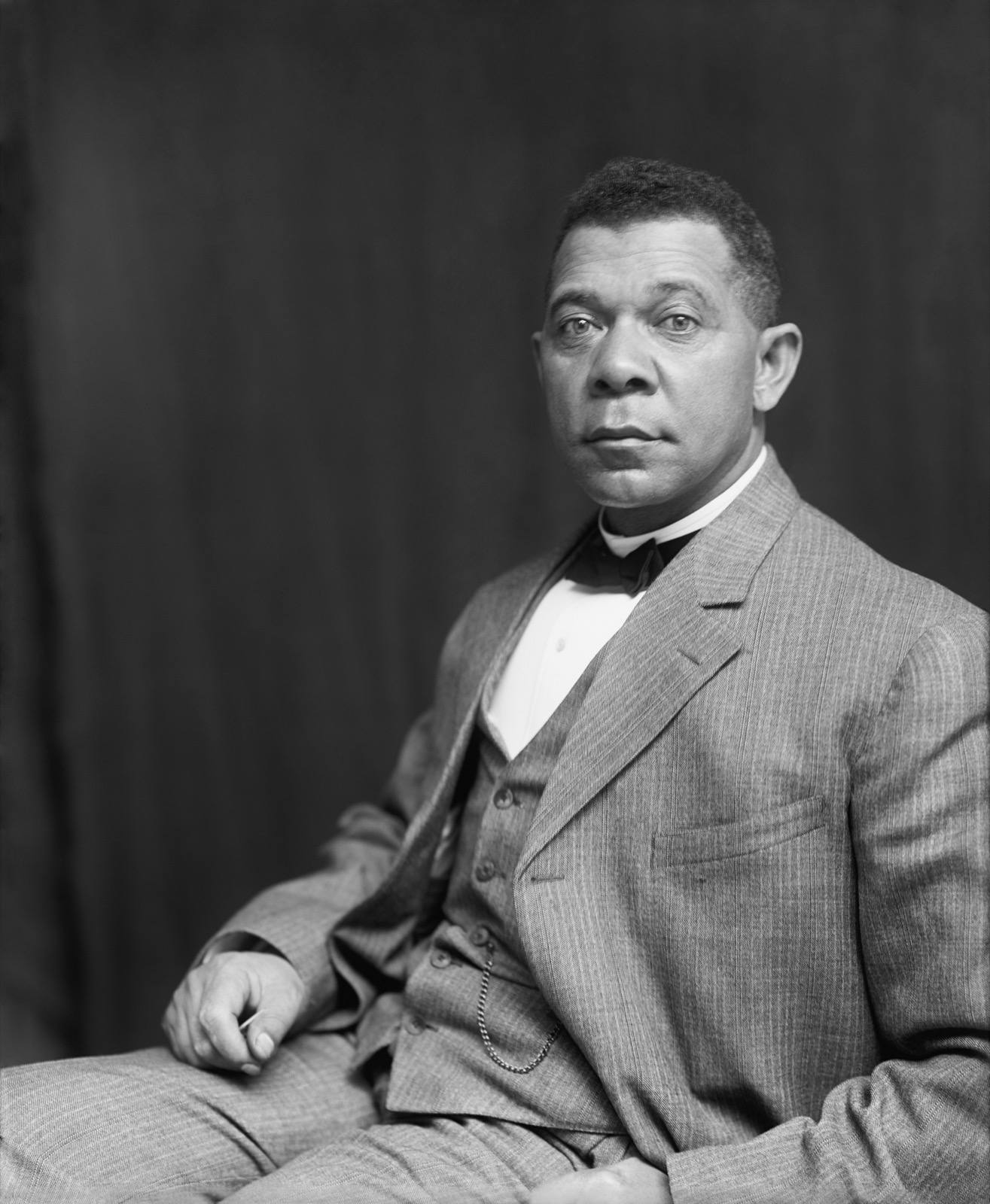
Every new file, the day it is filed.
“A Message to Students from Dr. Mark A. Brown.” That is the actual header on the letter Tuskegee sent, later published by WSFA as an image of the email itself. The salutation under it reads “Dear Tuskegee University Students.” Not parents. Students.
HBCU Gameday, HBCU Buzz, ThyBlackMan, and TheGrio each described it as a letter to parents of incoming students. Two of them, HBCU Buzz and TheGrio, credit Gameday’s report and use its wording; ThyBlackMan’s piece is an op-ed in its own words. A salutation says how a writer addressed the page, not who the mailing list reached. What’s verifiable is narrower than what circulated: written to students, described by four outlets, two of them echoing Gameday, as landing with parents. Both can be true.
The signal
Dr. Mark A. Brown, Tuskegee’s president and CEO since July 2024, a Tuskegee alumnus and retired Air Force major general, sent students a letter ahead of the fall term announcing “a new policy for student attire on campus, classroom attendance, and cell phone use in classrooms.” Its attire paragraph carries three rules: a business-suit requirement, “The Student Handbook requires students to arrive on campus with a business suit and proper shoes for a business meeting.” Then the two lines that circulated: no “revealing clothing” in class, the cafeteria, or Convocation, and no “bedroom shoes, bonnets, or du-rags” to class or the cafeteria. The news reports from WSFA, HBCU Gameday, and HBCU Buzz carried the business-suit line too; WSFA gave it its own line, ahead of the headwear ban. Only the op-ed defending that ban left it out. None of the headlines in the coverage cited here named the business suit.
Three attached policies, dress code, cell phone, attendance, carry the scope and enforcement. The Dress Code Policy doesn’t single out bonnets and du-rags; it covers head coverings generally. It lists “Hats, bonnets, head scarves, caps, hoods, du-rags, bandanas, sunglasses, and other non-religious or non-medically required head coverings” that “should be removed while in the classroom or cafeteria,” with an exemption for coverings “required for documented medical, religious, cultural, or University-approved purposes.” A student is first “asked to correct the issue,” then, on repeat, may be “asked to leave the class for that session,” with disputes referred to “the Dean of Students.”
Brown’s reasoning: “The goal here is not meant to restrict you from enjoying the Tuskegee Experience, but to prepare you with a solid foundation for the workforce you will enter once you leave Tuskegee. Employers are less forgiving and too often presentation may overrule stellar preparation.”
That is a president telling his students the world grading them won’t always grade fairly. He is not wrong that it happens. Whether preparing them for that unfairness is protection or surrender to it is the question the letter opened. A decorum code carved out for religion, medicine, and culture is not exactly the same fight as a rule aimed at bonnets and du-rags. Du-rags and bonnets sit inside “head coverings” same as anything else on that list, exemption or not.
The mirror
Tuskegee was founded in 1881 with Booker T. Washington as its first principal. In 1895, at the Atlanta Cotton States and International Exposition, he delivered the speech remembered as the Atlanta Compromise: economic advancement and vocational skill first, social and political equality deferred. “In all things that are purely social we can be as separate as the fingers, yet one as the hand in all things essential to mutual progress.” Du Bois and other Black intellectuals argued Washington had traded too much, too soon, for too little.
That history is in the room. ThyBlackMan ran an op-ed by L.L. McKenna defending the dress code as a continuation of Tuskegee’s founding mission, invoking Washington by name. HBCU Buzz, covering the same policy, named the other side: a “long-running HBCU debate over respectability politics.” Bonnets and du-rags aren’t fashion accessories at an HBCU. They’re how Black hairstyles survive a night and make it to morning.
The pattern
Both readings describe the same gesture from two directions. One side sees an institution arming its students for a world that will judge them by their clothes before it reads their transcripts, the same calculation Washington made in 1895, now in a president’s email instead of a stage speech. The other side sees an institution asking Black students to pre-concede a scrutiny that was never fair, and calling the concession preparation.
Neither side describes a new argument. Ron Stewart, Tuskegee alumnus, Class of ‘79, commented: “I wholeheartedly support this idea.” Vaughn, a self-described HBCU graduate naming no school, wrote: “College is a time of exploration and learning not subjective conformity.” Tricia Blount, who states no institutional affiliation, landed against it too, more measured than Vaughn but just as clear: “I’m not a fan of the idea, but the beauty of this is that students have other schools to select from next year.” (The thread ran to 48 comments, most of them in favor.) Three commenters, three relationships to the same policy. Only one says which institution he’s protecting.
The mechanism
The debate resurfaces because Tuskegee never settled it. Washington won the room in 1895, but never the community he was arguing for. Every generation since has relitigated the same bargain without the last generation’s receipts in hand, which is why each new version, a stage speech, a president’s email, a comment thread, sounds like a discovery instead of a repetition.
The cycle holds because both things here are worth protecting: a degree that opens doors at a school built when almost no doors were open to Black students at all, and the right to walk through those doors as yourself, hair covered how you need it covered. The letter asks students to choose between them instead of asking why they still have to.
On the table
Read the Atlanta Compromise speech in full, and Du Bois’s answer in The Souls of Black Folk. Then read Brown’s letter again: it spends a full paragraph on internships, certifications, and a Career Center, the part the headlines skipped.
Tuskegee has answered what happens to a student who shows up in a du-rag anyway: correction first, then possible removal from class, disputes to the Dean of Students. What it doesn’t settle is how consistently, and against whom, that discretion gets used.
Correction
Corrected 2026-09-30. This casefile published on July 29, 2026. Two errors are named here rather than quietly repaired.
The 1895 speech was placed on the wrong stage. The excerpt said Booker T. Washington opened this argument “from a Tuskegee stage in 1895.” He gave the speech at the Cotton States and International Exposition in Atlanta. The excerpt now says Atlanta.
The reporting that the letter went to parents was called independent. The casefile said three outlets “independently reported” the letter as going to parents. HBCU Buzz credits HBCU Gameday’s report and uses its wording, ThyBlackMan’s piece is an op-ed, and a fourth outlet, TheGrio, also credits Gameday and uses its wording. The passage now says what each outlet said. “Described by most coverage as landing with parents” now reads “described by four outlets, two of them echoing Gameday, as landing with parents.”
Smaller changes made at the same time, each quoted as it was and as it now reads:
- The subtitle’s “a workforce he says is ‘less forgiving’ than a classroom” now reads “employers he says are ‘less forgiving,’” because the letter says “Employers are less forgiving” with no comparison. Its “the university’s founder” now reads “Tuskegee’s founding principal,” the title the university’s own history gives Washington.
- The hook line’s “Three outlets reported parents” now reads “Four outlets said parents, two repeating the first.”
- “later photographed and published by WSFA” now reads “later published by WSFA as an image of the email itself.”
- “Its summary runs three sentences” now reads “Its attire paragraph carries three rules.” The paragraph runs five sentences.
- “Every straight-news outlet reported the business-suit line too” now reads “The news reports from WSFA, HBCU Gameday, and HBCU Buzz carried the business-suit line too.”
- “Public attention centered almost entirely on the third sentence” now reads “None of the headlines in the coverage cited here named the business suit.”
- “it bans indoor headwear generally” now reads “it covers head coverings generally,” followed by the policy’s own words, which say they “should be removed while in the classroom or cafeteria.”
- “then, on repeat, ‘asked to leave the class for that session’” now reads “then, on repeat, may be ‘asked to leave the class for that session,’” and “correction first, then removal from class” now reads “correction first, then possible removal from class,” because the policy says “may.”
- A sentence that ran two questions together, “Whether preparing them for that unfairness is protection or surrender to it. Whether a decorum code carved out for religion, medicine, and culture is the same fight as a rule aimed at bonnets and du-rags, not exactly. That’s the question the letter opened.”, now ends after the first question and states the second as a view.
- “Vaughn … answered” now reads “wrote,” because Vaughn’s comment was posted before the one it was said to answer. A line now gives the thread’s size: “(The thread ran to 48 comments, most of them in favor.)”
- “a faculty memo” now reads “a president’s email,” twice.
- “the part almost nobody quoted” now reads “the part the headlines skipped.”
- The hero caption’s “Public domain.” now reads “No known restrictions on publication.” Those are the Library of Congress’s own rights words.
Sources: Tuskegee University, “A Message to Students from Dr. Mark A. Brown” (email), and the attached Dress Code Policy; Tuskegee University, “History and Mission”; Booker T. Washington, Up From Slavery (1901), ch. XIV; HBCU Gameday, July 23, 2026; HBCU Buzz, July 26, 2026; TheGrio, July 26, 2026; WSFA, July 27, 2026; ThyBlackMan, July 28, 2026. Read on September 30, 2026.
Update
Updated 2026-09-30. This casefile published on July 29, 2026, and what follows happened after. It is not a correction. On August 19, 2026, ABC News reported from the first week of classes and described the letter as “an email to the student body.”
Source: Synai Ferrell and Jeana Fermi, ABC News, August 19, 2026. Read on September 30, 2026.
Cite this file
Word Reimagined, “COMPROMISE,” WR-FCT-016, https://doi.org/10.5281/zenodo.23064470.
The number is permanent. WR-FCT-016 names this file today and will name the same file in ten years. Add the date you retrieved it.
This file is also deposited with Zenodo, at CERN, under 10.5281/zenodo.23064470. That copy carries the essay whole, its docket and its source ledger, and it outlives this domain.
Trace record
Every claim in this file resolves to a source in the custody ledger.
- No Bonnets, Du-Rags, or Bedroom Shoes: Tuskegee University Updates Student Rules for Fall
WSFA 12 News, "No bonnets, du-rags, or bedroom shoes: Tuskegee University updates student rules for fall," 27 July 2026. Includes an image of Dr. Mark A. Brown's email to students, credited to Tuskegee University.
article A
- Tuskegee University Dress Code
HBCU Buzz, "Tuskegee University Dress Code," 26 July 2026.
article B
- Tuskegee University Dress Code: Bonnets, Du-Rags, and Standards
L.L. McKenna, "Tuskegee University Dress Code: Bonnets, Du-Rags, and Standards," ThyBlackMan, 28 July 2026 (op-ed).
article C
- HBCU Introduces Dress Code, Cell Phone and Attendance Policies
Steven J. Gaither, "HBCU introduces dress code, cell phone and attendance policies," HBCU Gameday, 23 July 2026, including 48 reader comments.
article B
- Dr. Mark A. Brown Named Tenth President and CEO of Tuskegee University
Tuskegee University, presidential announcement/biography, 2024.
web B
- Atlanta Compromise Speech (Atlanta Cotton States and International Exposition)
Booker T. Washington, address at the Atlanta Cotton States and International Exposition, September 18, 1895. Reproduced in Washington's autobiography, 'Up From Slavery' (1901), Chapter XIV.
archive A
- A Message to Students from Dr. Mark A. Brown
Dr. Mark A. Brown, "A Message to Students from Dr. Mark A. Brown," Tuskegee University Constant Contact email, accessed 28 July and 30 September 2026. URL returned 404 on 3 August 2026 and was live again on 30 September 2026; see the note below.
web A
- Tuskegee University Dress Code Policy for Students (attachment)
Tuskegee University, "Dress Code Policy for Students," .docx attachment to Dr. Mark A. Brown's Constant Contact letter to students, accessed 28 July 2026.
web A
- Tuskegee University Cell Phone Policy (attachment)
Tuskegee University, "Tuskegee University Cell Phone Policy," .docx attachment to Dr. Mark A. Brown's Constant Contact letter to students, accessed 28 July 2026.
web A
- Tuskegee University Policy on Attendance, Absenteeism, and Tardiness (attachment)
Tuskegee University, "Tuskegee University Policy on Attendance, Absenteeism, and Tardiness," .docx attachment to Dr. Mark A. Brown's Constant Contact letter to students, accessed 28 July 2026.
web A
- HBCU sparks uproar with dress code banning bonnets and durags
Synai Ferrell and Jeana Fermi, ABC News, 19 August 2026.
article B
- Tuskegee University's new dress code bans bonnets, durags and bedroom shoes in class
Bobby Pen, TheGrio, 26 July 2026.
article B
- History and Mission | Tuskegee University
Tuskegee University, 'History and Mission,' tuskegee.edu.
web B
Sources are graded A (primary) / B (secondary academic) / C (secondary journalism) / D (tertiary or contested). See the manifesto’s Evidence Standard for full criteria.
File custody
- File
- COMPROMISE
- Accession
- WR-FCT-016
- Thread
- PRESENTABLE
- Status
- published
- Published
- 2026-07-29
- Last updated
- 2026-09-30