WORD REIMAGINED The wire · 31 filed · live

Word of the Week · Issue 007 · Week of 24 August 2026

REFUSE

What it claims
A housekeeping term. Waste matter, swept from a room where work has been done, and deposited where waste goes.
What it does
A medical school in Richmond wrote a rule about where to put the bodies. The rule used the word refuse, and the rule was obeyed.
The receipt
The school did not have a habit. It had a regulation.
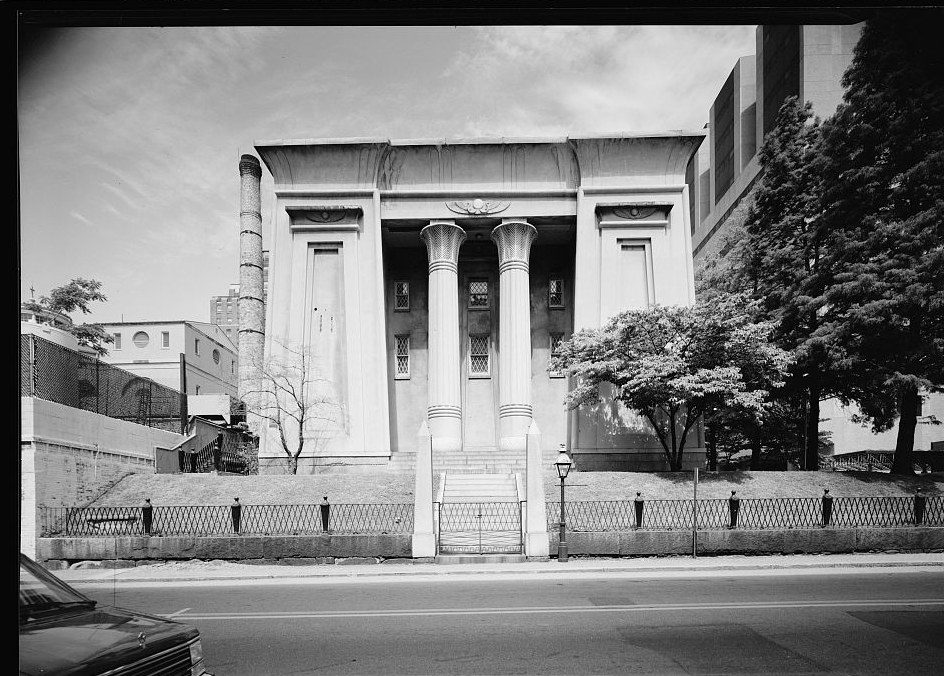
Black-and-white photograph of the Egyptian Building in Richmond, Virginia, seen straight on from across the road. An Egyptian Revival facade with two lotus-capital columns set between heavy battered piers, a cavetto cornice above, and a low iron fence along the sidewalk. A parked car sits at the lower left of the frame.
The Egyptian Building, 1200 block of East Marshall Street, Richmond. The anatomy and dissecting rooms were inside it. In April 1994 construction workers found the well beneath the street. Historic American Buildings Survey, HABS VA-1421. Library of Congress; no known restrictions on images made by the U.S. Government.

In 1856 the Medical College of Virginia wrote a housekeeping rule. The demonstrator of anatomy shall see that the offal is not allowed to collect in the dissecting or dead room, and shall deposit it in the sink provided for that purpose.

Shall see. Shall deposit. That is a standing order, and the noun inside it is a person. Earlier minutes had already reached for the other word, directing removal of the refuse matter so as never to give offense to the citizens. The paperwork will not say which hole they used. The skulls will. In 1994 workers found a well under East Marshall Street holding a minimum of forty-four adults and nine children.

A minimum. The university writes refuse on its own site now. It is not reaching for the harshest term available. It is quoting itself.

Docket

Code of Virginia (1849), ch. 196 § 13, p. 740, strengthened in the session of 1847-48: 'If a free person, unlawfully, disinter or displace a dead human body, or any part of a dead human body, which shall have been deposited in any vault or other burial place, he shall be confined in jail not more than one year, and fined not exceeding five hundred dollars.' NOTE THE CONDITION: the statute protects a body that HAD BEEN DEPOSITED in a burial place. The Family Representative Council states that at least some of these people may never have been deliberately buried. The section rubric is 'Violation of sepulture.' The phrase 'violation of the sepulcher' appears nowhere in the Code and must never be quoted as statutory language. Trust tier: primary, read directly.

Read the file REFUSE WR-FCT-024
On the wire