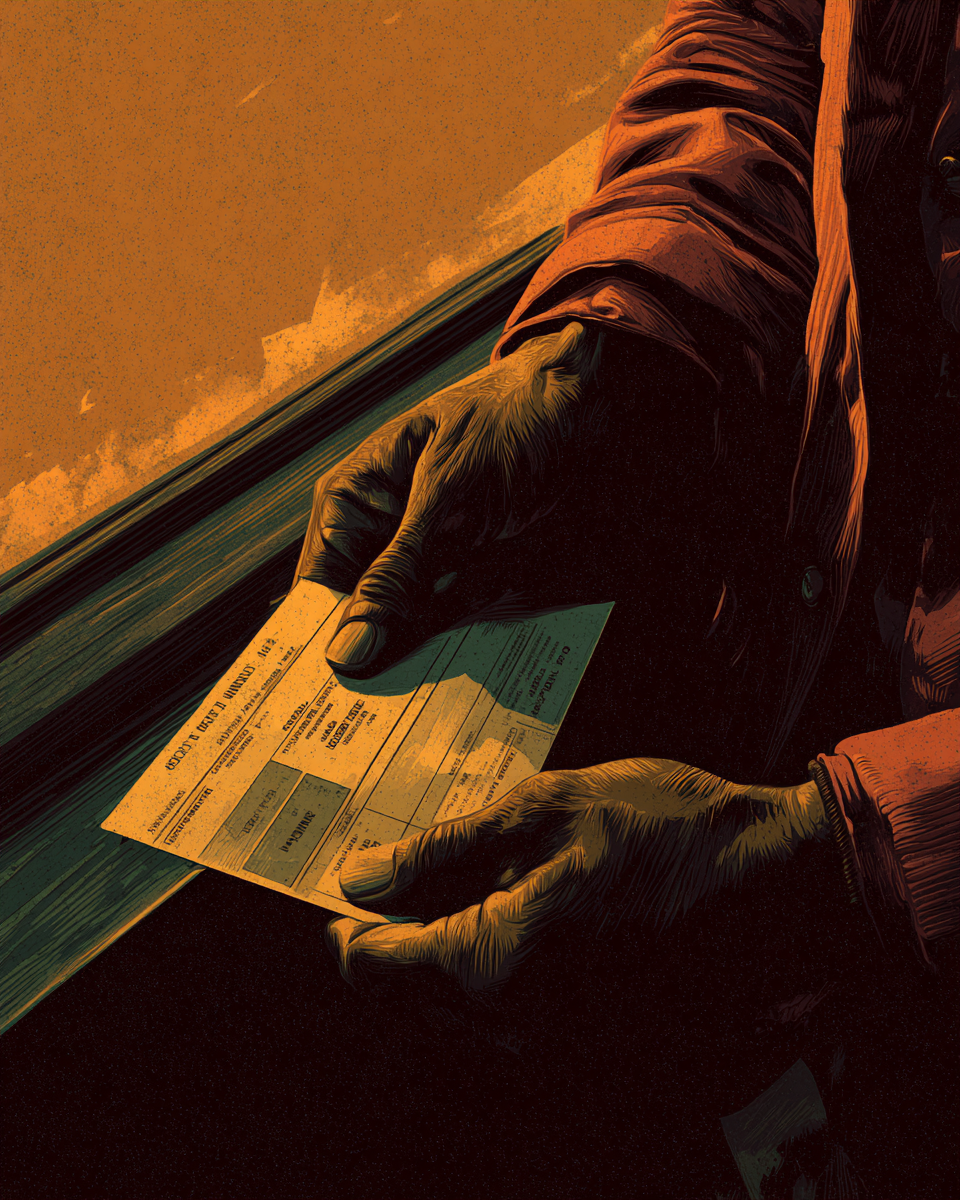
Following portfolio risk review, the above-referenced property has been reclassified.
Coverage will not be renewed at the expiration of the current term.
This determination is final.
This determination is not an assessment of the policyholder.
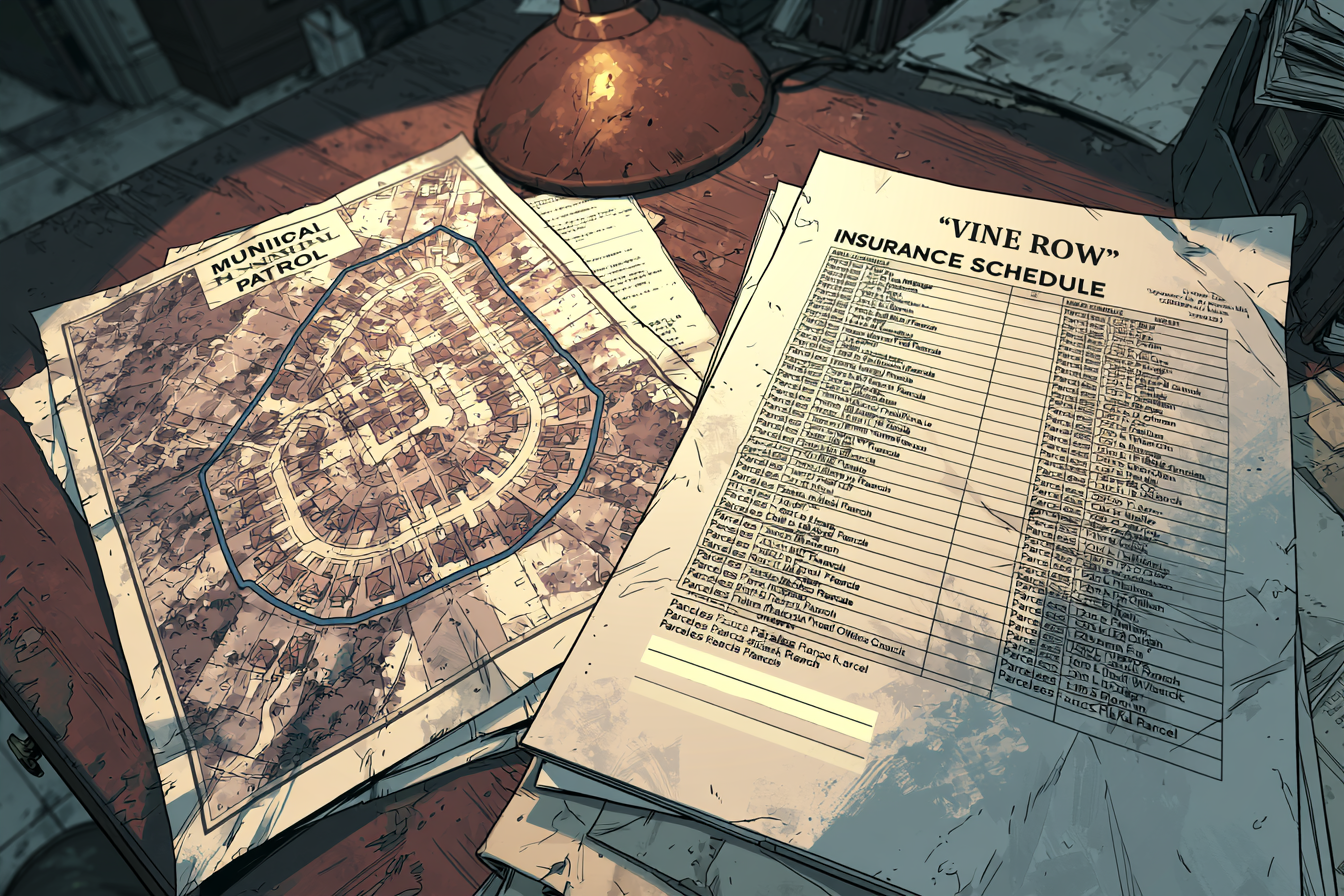
I have two maps on the table, and I am going to show you they are the same map.
The first one is a patrol route. Someone drew it carefully, in a blue that reads as protection, and it runs along the edge where Foxglove Heights stops sitting empty and starts becoming an investment. Foxglove is the cul-de-sac district the money left forty years ago and the money is buying back now, cheap, through the Zone. The route hugs that new money like a coastline. The second map is an insurance memo, and it has no route on it at all. It has a list. Vine Row, parcel by parcel, reclassified and repriced, and near the bottom of the list, a house that is paid for.
I want to tell you about the house first, because the house is where the word lands.
Her house is paid for, which in Vine Row is not a fact about money. It is a fact about staying.
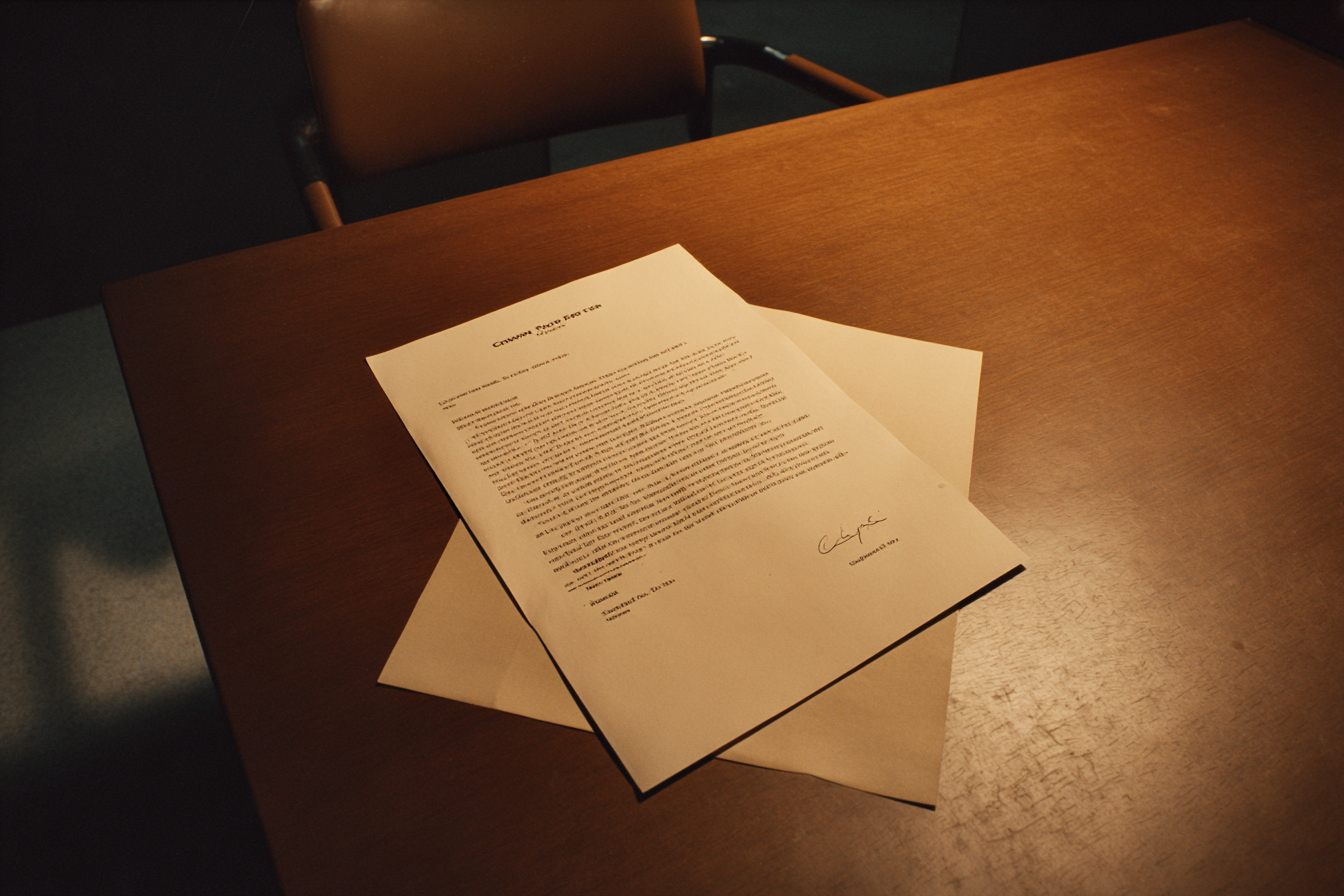
Miss Ozella has held her block a long time. Her house is paid for, which in Vine Row is not a fact about money. It is a fact about staying. The letter came in an envelope with a cellophane window, the kind that shows your name through the plastic so a machine can sort you without a person ever holding it. It does not say Miss Ozella. It does not say Miss anything. It says the policyholder.
In a city that runs on yes ma'am, on Miss and Mr. in front of a first name before anybody gets down to why they called, a letter that will not spend the two words of her name is telling her exactly how it sees her. The missing courtesy is the message. Everything printed under it is only the procedure.
Following portfolio risk review, the above-referenced property has been reclassified.
Coverage will not be renewed at the expiration of the current term.
This determination is final.
This determination is not an assessment of the policyholder.
That last line is true. It is not an assessment of her. She kept her gutters clean for forty years and this is not about her gutters. It is about a portfolio she was folded into by people she will never meet, in a room where the loss is decided before anyone walks in. I have heard that room described. A man I used to know described it once, to someone else, and did not know I was keeping the file.
The fear comes before the protection, the way the label comes before the exclusion and the invitation comes before the sale.
Before the letter, there was a meeting. Before the meeting, there was an assessment. This is the order it comes in. The fear comes before the protection, the way the label comes before the exclusion and the invitation comes before the sale.
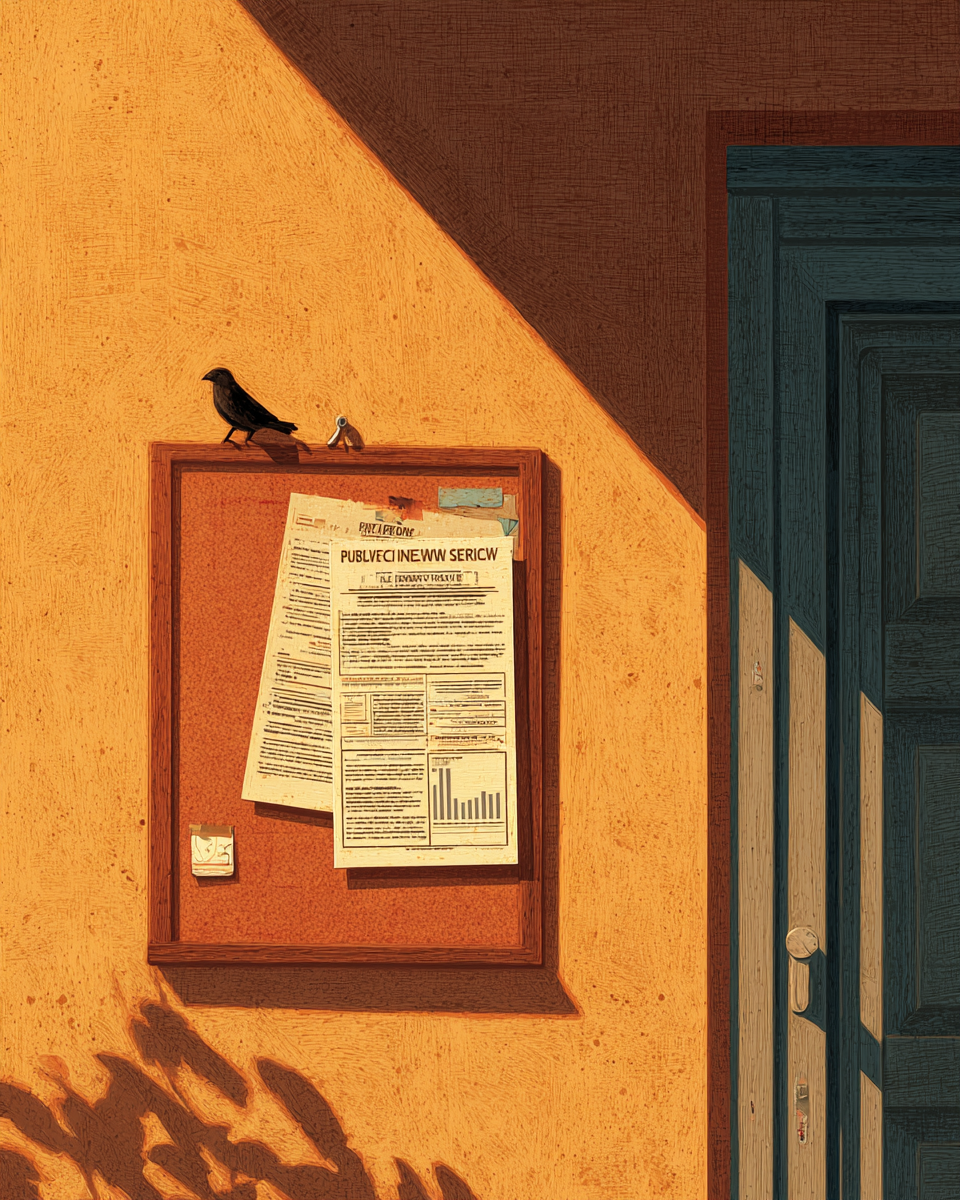
The assessment is a document called a public safety review. Nobody in Vine Row asked for it. It counts things, and counting is how you make a feeling look like a finding. It reports an uptick. An uptick is a shape you can draw out of almost any month if you choose your months. The neighborhood association passes it hand to hand at a Tuesday meeting. A television segment stands a reporter on our corner at dusk, where every corner looks like the thing you were already afraid of, and reads the number out loud. By the weekend the number is a fact, and the fact has a mood, and the mood has our name on it.
Here is what the review does not say. It does not say who is afraid. There are two fears here and only one of them is getting a budget. There is the fear a family on Vine Row carries up the porch steps at night, and there is the fear an investor carries about an asset on Foxglove's edge, and it is the second fear that hired the patrol and drew the map. They sold it to us as the first one. Two fears, one policy. Only one of them gets protected, and it is not the one on the porch.
You do not go to a meeting like that to speak. You go to see which pieces a man is willing to give up.
I went to the meeting to watch. You do not go to a meeting like that to speak. You go to see which pieces a man is willing to give up.
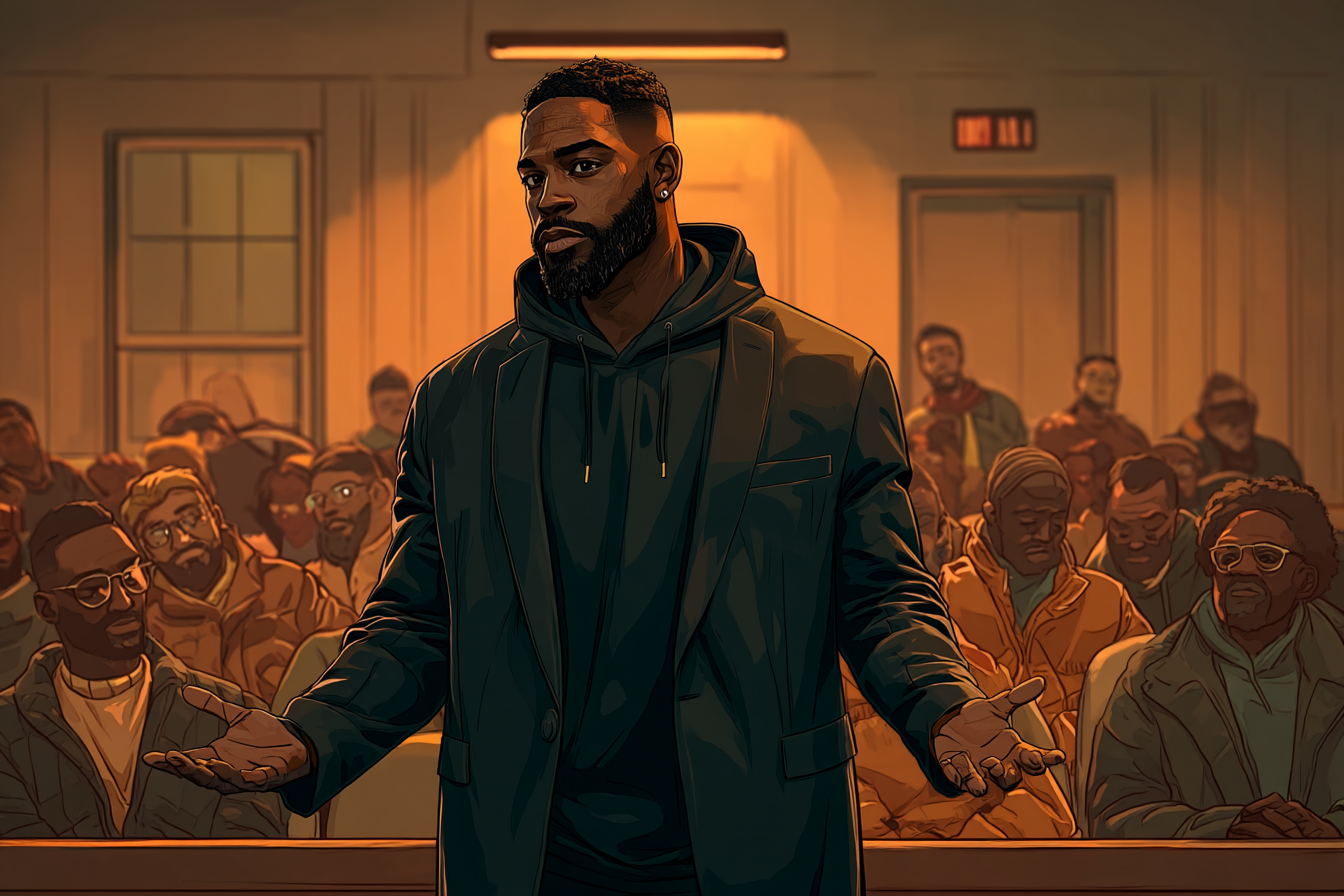
Robin came home to introduce it. That is the part they built the night around, and I will give them this, it is good building. He is Vine Row's own, the boy from this block who left and learned the language somewhere that paid him for knowing it and came back carrying it like a key. He does not read a script. He talks about his grandmother's porch and he means it, and the room leans toward him because the room remembers the porch. When he gets to the framework he does not call it surveillance. He calls it care that shows up on time. Somebody near me writes that down.
I watch him the whole time. He code-switches clean, the way a man changes lanes without touching the wheel hard, warm in this room because warmth is true in this room and he is not faking the warmth. The folio stays closed on the table beside him with the bird stamped in the corner. He smiles the smile that is credible and not fake, which is the most expensive thing he owns. Whatever the map is costing him, if it is costing him, does not reach his face. We read him from the outside, which is the only honest place to read a man who has not yet decided what he is.
He says safety eleven times. He says neighbors, he says ours, he says home. He does not say the name of the insurer. He does not say Foxglove Heights. He does not say that the route and the repricing were drawn by the same hand in the same week, because he may not have laid them side by side himself, and that is the mercy the machine gives its favorite sons. It lets them carry one map at a time.
I laid them side by side.
The patrol map protects Foxglove's investment. Not its people. Foxglove barely has people anymore, that is the point of Foxglove, it is a soft district being made hard again for a return. The insurance memo un-protects Vine Row's people, who are very much still here, which is the point of Vine Row, it is the harvest the machine already ate from and keeps eating. The patrol map and the insurance map are the same map. One draws where the protection goes. The other prices where it does not. An insurer nobody in this room will ever meet. A route nobody in this room voted on. That is how the pressure arrives, from across the board, on the angle, never once standing next to you where you could put a name to it.
His paragraph is four sentences and every one of them is true. That is the horror of his handwriting.
There is a signature in the memo chain, low and clean. Carter Sloane, a risk officer at Crown River. His paragraph is four sentences and every one of them is true. He writes that the model reclassified the tract, that the threshold was applied uniformly, that the determination reflects portfolio exposure and not individual conduct, and that the rating will be revisited only upon transfer of title.
The model has reclassified the tract.
The threshold was applied uniformly across the portfolio.
This determination reflects portfolio exposure and not individual conduct.
The rating will be revisited only upon transfer of title.
The only way to have the number looked at again is to stop being the person the house belongs to. He never says I decided. He has built a life where he never has to. Fact-check him and you pass. That is the horror of his handwriting.
He looks like a man who has made his peace by never laying the two pages side by side. I laid them side by side.
Afterward Robin finds me on the sidewalk, because of course he does. The crowd thins and it is just the two of us under a light that used to be brighter, in front of a fellowship hall we both know the inside of from before either of us knew any of these words.
He says my name the old way. He asks about my mother. He remembers that her greens need a ham hock and a full afternoon, and he is right, and for a second the sidewalk is 1998 and neither of us has sold anything to anybody. He is not performing the memory. He remembers all of it. He remembers the porch and the rent parties and the way we used to read the landlord like a board, three moves out, laughing. The memory is intact. The memory is perfect.
And it changed nothing. He is standing on the sidewalk that raised him, holding a folio that will price his neighbors out of the houses their grandmothers paid for, and I watch the two things sit in the same man and never touch. The warmth is real. It reaches his face and goes no further than I can see. He holds the folio the way he holds the memory, both hands easy, and nothing in how he stands tells me the weight of the one has found the warmth of the other. From the outside, tonight, he looks like a man who has made his peace by never laying the two pages side by side. I laid them side by side. That is the only difference between us I can name on this sidewalk, and I am not sure it is one he could afford to see.
I do not argue with him. You do not reach for a man in the middle of his opening. I ask him how his grandmother's house is holding up. He says fine. He says it a beat too easy. I file the beat.
Then I go home and I put the two maps back in the folder, and I write the only sentence the night earned. By the end of this the block will be called a problem out loud, in a document, with a number attached, so that someone can arrive with the solution. That is the sequence.
They make the wound, they name the wound, they sell you the bandage, and they bill you for all three.
They called it security. What they secured was the distance between the two maps, and the quiet it takes to keep them apart.