He Asked Me Once
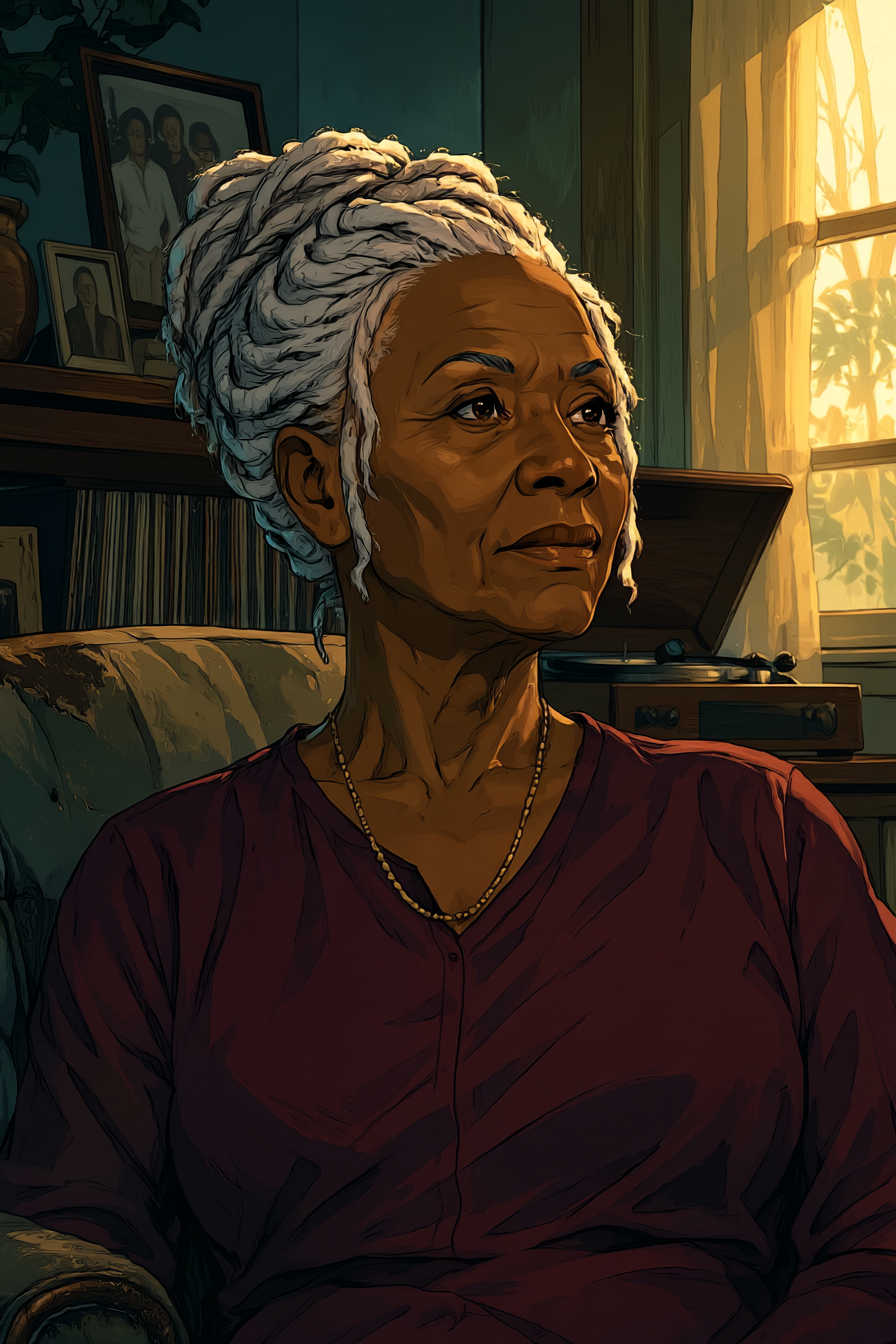 Mother Baptiste · July 12, 2026
 Filed: routine domestic inquiry, resolved same day. Subject satisfied. No further action required.
He was seven that summer. Might have been eight. I could go in the box and get the picture and settle it, but I find I don’t want to today.
It was hot the way it gets here in August, where the air has some weight to it and the house keeps the heat long after the sun has quit. I had the fan going in the kitchen window. The old one, metal blades, the one Leon been saying he’s going to replace since Clinton was president. I was shelling peas into the blue bowl.
Alaric was at the table with his knees up under him, drawing on the back of a church program. He drew on everything back then. Bulletins, envelopes, the good napkins one time, which we do not discuss.
He didn’t look up when he said it.
That’s how I knew he’d been carrying it a while.
“Grandmama. What was my daddy like.”
Not a question, the way he said it. He had already decided to ask. He’d spent some time getting his voice flat enough to do it, the way a child will practice a thing in his head until it comes out sounding like it don’t matter.
I kept my hands going.
That’s the first thing I want to say to whoever’s reading this, and I don’t expect it to land right, so I’ll just put it down and let it sit. You keep your hands going. A child watches your hands before he hears a word out of your mouth. If your hands stop, he knows the question was heavy, and then the answer has to carry the weight of the stopping too.
So I kept shelling. And I told him.
I told him Elias Toussaint had the finest hands I ever saw on a man. That he fixed washing machines, and he was good at it, and he was proud of being good at it, which is a different thing and rarer. I told him his daddy could stand in a room with a machine running and tell you what was wrong with it without ever putting a hand on it. Just listening. Head tilted a little, like a man listening to somebody talk low in the next room.
I told him Elias laughed with his whole chest and you could hear it two houses down. That he called your mother by her whole name when he was being sweet and by nothing at all when he was being foolish. That the day you were born he did not sit down one time. Not once. Eleven hours on his feet in that hallway, and when they finally let him hold you he cried so hard the nurse had to take you back.
I told him his daddy loved him. I told him his daddy was proud of him.
Every word I said to that child was true.
The fan turned. I got up and turned it a quarter to the left, toward the table, because it was hot and he was sitting in the still part of the room, and I sat back down and picked up the bowl.
That is what I did.
I want the record to show what I did.
He listened to all of it with his chin down on his arm. He didn’t ask what I thought he’d ask. He didn’t ask how, and he didn’t ask why, and he didn’t ask the thing children ask that will take the skin off you, which is did he know me.
When I was done he was quiet a little while.
Then he said, “Okay.”
And then he said, “Thank you, grandmama.”
And he went back to his drawing.
I have turned that over more Sundays than I can count. That okay. Seven years old and he took what I gave him and he put it away somewhere and he said thank you.
He never asked me again.
Not once. Not the year he made the honor roll, not the year he got tall, not the year he came home from that school in Baton Rouge with his shoulders up around his ears and wouldn’t say what for. Not the night he sat right there at that same table, grown, and told me he was tired in a way sleeping don’t fix.
Not one time in all the years since.
I gave him something true and he thanked me for it and he never came back to that door again.
The peas were done before the light went. I put the pot on. He stayed at the table drawing until his mama came, and when she came he folded the paper up small and put it in his pocket, the way he does, and he never showed me what it was.
I still have the blue bowl.
I’ll tell you the rest of it another Sunday.